
Trump’s ‘Woke’ JLR Attack Puts EV Strategy in the Spotlight
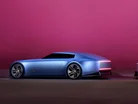
Jaguar Land Rover (JLR) continues to evolve in 2025, with a sharper focus on EVs, a new leadership direction and major changes across operations.
From a transition in the top job to the roll-out of its electrification plans, the company sets out to meet its targets as an “electric first business.”
Yet this progress unfolds against political pushback abroad and challenges tied to global emissions goals.
New leadership confirmed at JLR
On 4 August 2025, JLR announced its new CEO, adding to the list of vast changes throughout the company.
JLR’s incoming CEO is PB Balaji, who is currently serving as Chief Financial Officer (CFO) of Tata Motors, and will be succeeding Adrian Mardell in November 2025.
"It is my privilege to lead this incredible company," says PB.
“Over the past eight years I have grown to know and love this company and its redoubtable global brands.
"I look forward to working with the team to take it to even greater heights.
“I thank Adrian for his immense contributions and wish him well for his next innings.”
Adrian, who has led the business for three years, announces his retirement in August.
He marks the move as a natural step after decades at JLR and overseeing the company through a transformation phase.
“These three years have been a great privilege,” says Adrian.
“Together with the incredible JLR workforce, we have cemented JLR’s position in the automotive industry during a time of incredible change.
“I would like to thank everyone in JLR and the extended Tata Group and wish Balaji every success in his new role.”
This leadership transition comes as JLR continues with its electrification plans and sustainability goals.
Jaguar is set to relaunch as an all-electric luxury brand. In parallel, six fully electric Land Rover models are scheduled to launch by 2026.
This forms part of a wider strategy to become an “electric first business” by 2025.
Electrification, emissions and Trump’s backlash
As JLR aligns with the UK government’s net zero targets, its approach to electric mobility and sustainability meets resistance abroad.
US President Donald Trump targets the company directly through a series of social media posts.
He claims JLR is in “absolute turmoil” and that Adrian left “in disgrace.”
President Trump also attacks the company’s EV-focused advertising, calling it “stupid” and “woke.”
These criticisms echo broader resistance to electric vehicles across parts of the United States, where Trump proposes rolling back key emissions legislation.
Jaguar Land Rover outlines its roadmap in line with carbon targets and UK climate policy.
The group aims to achieve net zero carbon emissions across its supply chain, products and operations by 2039.
“We are transforming our business, targeting carbon net zero across our supply chain, products and operations by 2039,” writes JLR after investing £500m (US$666.2m) into creating an EV factory in Merseyside.
“We have set a roadmap to reduce emissions across our own operations and value chains by 2030 through approved, science‑based targets.
“Electrification is central to this strategy and before the end of the decade our Range Rover, Discovery, Defender collections will each have a pure electric model, while Jaguar will be entirely electric.”
Meanwhile in the US, Trump pushes to eliminate the 2009 Endangerment Finding, a core policy from the Environmental Protection Agency (EPA) which legally supports federal GHG regulations.
If removed, the legal basis for regulating vehicle and engine emissions at a national level would collapse.
This proposal is unveiled at a car dealership in Indiana with Secretary of Energy Chris Wright, EPA Administrator Lee Zeldin and Indiana Governor Mike Braun.
More than 100 environmental regulations have already been rolled back or scrapped, including measures for clean air, water, emissions and hazardous chemicals.
Reimagine strategy moves forward despite global headwinds
JLR continues its transition under its Reimagine strategy, which places EV production and sustainability at the centre of its operations.
The approach is built around three principles: electrification, circular economy and carbon reduction.

Key targets include halving value-chain carbon equivalent emissions by 2030 and reaching net zero by 2039.
Current initiatives include:
Use of recycled aluminium with up to 75% content
Non-leather interiors with sustainable alternatives
Enhanced vehicle recyclability and disassembly
Zero waste sent to landfill across UK production sites
All UK manufacturing powered by 100% renewable electricity.
Since 2007, JLR has reduced the energy required per vehicle by one-third.
Its main development locations now hold carbon neutral certification.
Across materials, tyres now contain more than 70% renewable or recycled content and a closed-loop recycling system is in place for aluminium.
The company reports generating over £100m (US$133m) in value from reuse and circular design.
Social responsibility is also part of the Reimagine approach, with the launch of the JLR Foundation focused on supporting young people and vulnerable communities.
At the same time, JLR acknowledges that aligning its total greenhouse gas output with the world’s most ambitious climate goals remains a challenge.
While investments and internal shifts are clear, balancing global expectations with political resistance, especially in the United States, adds complexity to the path ahead.