
Trump's Tariff Truce: A Month's Respite for Automakers
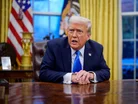
In a move that sent ripples through Wall Street and sparked mixed reactions from industry leaders, President Donald Trump granted US automakers a one-month exemption from newly imposed tariffs on imports from Canada and Mexico. The decision, revealed by White House Press Secretary Karoline Leavitt, comes after direct talks with the Big Three automakers – Ford, General Motors (GM) and Stellantis – amidst growing concerns that the escalating trade war could cripple domestic manufacturing.
A pause, not a resolution
The temporary reprieve, however, offers only a brief respite. The 25% tariffs, initially implemented to address issues ranging from illegal immigration to trade imbalances, remain a looming threat.
While shares of major US, Asian and European automakers experienced an immediate surge of up to 6% following the announcement, the underlying uncertainty continues to cast a shadow over the industry.

Trump's message: Reshore production
The exemption is contingent upon automakers complying with existing free trade rules, namely the United States-Mexico-Canada Agreement (USMCA). White House Press Secretary Karoline Levitt relayed Trump’s direct message to automakers seeking a reprieve: "He told them that they should get on it, start investing, start moving, shift production here to the United States of America where they will pay no tariff."
The action demonstrates the administration's broader objective of incentivising companies to return manufacturing to the US.
Industry reaction: cautious optimism meets union scepticism
The automakers' initial responses were cautiously optimistic. Ford expressed their commitment to a "healthy and candid dialogue with the Administration to help achieve a bright future for our industry and US manufacturing."
GM echoed these sentiments, thanking Trump "for his approach, which enables American automakers like GM to compete and invest domestically."
However, union leaders representing autoworkers expressed deep scepticism. John D'Agnolo, president of Unifor Local 200 representing Ford employees, conveyed "mixed emotions," describing the situation as "unfair" and lamenting the lack of a long-term solution.
Lana Payne, Unifor National President, was even more critical, dismissing the reprieve as a mere tactic to pressure companies into relocating production to the US. Payne argued that the move "doesn't really change anything" and accused Trump of using the reprieve to "squeeze" Canada.
A ten-day countdown to shutdown?
The stakes are high. Prior to the exemption, Ontario Premier Doug Ford warned that the auto sector in the US and Canada would last approximately 10 days before assembly lines began shutting down due to the tariffs.
"People are going to lose their jobs," Doug cautioned. While the one-month reprieve buys some time, it raises concerns that it is merely a window for automakers to prepare for a potential relocation of production to the US, as feared by Premier Ford, who stated, "I always worry when someone says 30-day reprieve that gives them a chance to start lining things up and planning their next move."
Market response: A temporary boost
The stock market's immediate reaction was overwhelmingly positive. Major indices closed higher, with the Dow Jones Industrial Average gaining 485-486 points, or 1.1%, the S&P 500 rising 1.1% and the NASDAQ Composite adding 1.5%. Automaker stocks saw significant gains, with Ford's shares increasing by 5.8%, General Motors' shares rising by 7.2% and Stellantis experiencing a 7% surge.
The positive market response suggests that investors viewed the temporary exemption as a sign of potential de-escalation in the trade war.
The broader implications
The tariff truce arrives amidst a complex web of trade negotiations and political manoeuvring. However, Trump's approach has drawn retaliatory measures from key trading partners, including Canada, further complicating the situation.
As the one-month exemption period unfolds, the North American automotive sector remains on high alert. The long-term impact of Trump's trade policies on the industry, its workers and the broader economy remains to be seen.
Whether the tariff truce leads to a more lasting resolution or merely delays an inevitable reckoning will depend on the ability of policymakers and industry leaders to navigate the complex challenges ahead and strike a balance between protecting domestic interests and fostering mutually beneficial trade relationships.
Stay informed and inspired with the EV Magazine community by signing up for our free weekly newsletter. Each week, receive in your inbox the latest industry news and in-depth insights into the world of electric vehicles, sustainability and cutting-edge innovations
Subscribe now, don’t miss the opportunity to stay ahead in the fast-evolving EV industry.
EV Magazine is a BizClik brand.