
This Week's EV Top 5 includes Tesla, BYD, Amazon and More...
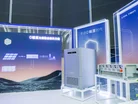
Tesla & BYD: Why are EV Manufacturers Making Solar Storage?
The 2025 UN Energy Transition Report highlights that while solar PV and wind dominate new global power capacity, renewable energy is still not displacing fossil fuels fast enough.
Batteries are emerging as a crucial solution, supporting both renewable energy integration and transport electrification.
EV manufacturers like Tesla and BYD are expanding into solar and energy storage, with Tesla’s Megapack and Powerwall and BYD’s Battery-Box and large-scale Saudi Arabian project.
Battery costs for grid storage have fallen 93%, and solar PV electricity generation costs have dropped 68%.
In 2024, 91% of new renewable projects offered cheaper electricity than fossil fuel alternatives. CATL, the world’s largest battery maker, is also advancing modular energy storage systems like EnerOne and TENER to strengthen grid stability and clean energy use.
As the world accelerates towards net zero, the question of mineral availability has emerged as a pivotal factor in determining the speed and success of energy transitions.
Among the essential minerals, lithium is not just indispensable for EV battery production, but it is pivotal in supporting the broader clean energy infrastructure.
Without a reliable supply of lithium, delays in global decarbonisation efforts are likely.
EVs offer enhanced fuel efficiency, reduced operational costs and lower emissions according to the US Department of Energy.
Amazon is leveraging these advantages to promote EV adoption and integrate advanced technologies across its logistics operations and supply chain.
Amazon's electric fleet now exceeds 30,000 vehicles, facilitating the delivery of 1.5 billion packages around the globe.
Samsung has secured a US$16.5bn contract to produce advanced AI chips for Tesla, marking one of the most notable semiconductor deals in the company’s history.
This collaboration emphasises Tesla's dedication to enhancing its electric vehicle technology, particularly in the autonomous driving segment.
The South Korean technology giant announced the arrangement with Tesla through a regulatory filing, which was later confirmed by CEO Elon Musk.
He shared that Samsung will be responsible for manufacturing the next-generation A16 chips at a new facility situated in Taylor, Texas.
"The strategic importance of this is hard to overstate," Musk expressed on X, highlighting the substantial value of this agreement for Tesla's ambitions in the driverless vehicle market.
Electrification stands as a crucial means for emission reduction in the energy sector, according to the International Energy Agency (IEA), facilitating a transition from liquid and gaseous fuels to renewables.
This shift is primarily driven by the surging sales of EVs and the global policy shift to phase out petrol and diesel cars.
Consequently, the demand for lithium-ion batteries, pivotal to powering these vehicles, is experiencing rapid growth.
This increased need is exerting substantial pressure on worldwide lithium resources.
Questions arise regarding the volume of lithium required and whether the current pace of mining, refining and recycling can meet the looming demands effectively.