
Why President Trump's Tariffs are a Legal Quagmire
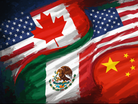
Donald Trump's imposition of tariffs on Canada, Mexico and China, citing national security and invoking the International Emergency Economic Powers Act (IEEPA), has sent ripples throughout the global economy – and the EV industry is certainly not immune.
Experts are debating the legality and economic implications of this action, particularly in the automotive sector, which is deeply integrated across North America.
Understanding IEEPA: From sanctions to tariffs
The International Emergency Economic Powers Act (IEEPA), enacted in 1977, gives presidents considerable leeway to regulate economic transactions during national emergencies.
Initially intended for sanctions against adversaries, Trump's administration broke with tradition by using it to impose tariffs on significant trading partners.

The move, spurred by concerns over fentanyl smuggling and irregular migration, has led to serious questions about the scope of executive power. As the Council on Foreign Relations argues, Trump is "making an unconstitutional power grab by using the declaration of a national emergency to grant himself authority he does not have".
The tariff landscape: A 2025 snapshot
As of March 6, 2025, considerable tariffs are in effect:
- 25% on imports from Canada (10% on energy resources)
- 25% on imports from Mexico
- 20% on imports from China (increased from an initial 10%)
However, there has been a 30-day respite on tariffs for Mexico and Canada following an appeal made by General Motors, Ford and Stellantis. The tariffs, in addition to existing duties, significantly impact trade relationships and the broader economic picture.
The legality of Trump's tariffs is far from settled. While courts generally defer to presidential authority in international trade matters and national emergencies, employing IEEPA to levy tariffs on allies represents a significant departure from established norms.
Such circumstances have understandably invited scrutiny and ignited concerns about potential legal challenges. The unprecedented use of IEEPA for tariffs on allies has led to uncertainty about possible legal challenges.
While the situation remains fluid, government officials are weighing in. US Secretary of Commerce Howard Lutnick indicated a willingness to find a potential middle ground with Canada and Mexico, suggesting that active negotiations continue.
Defending his actions, President Trump stated: "We must use all tools at our disposal to address the extraordinary threat posed by illegal aliens and drugs, including deadly fentanyl."
Economic fallout: EVs in the crosshairs
Tariffs have far-reaching economic consequences, with the EV industry feeling the sting.
"Actions risk undermining US economic security by their direct economic repercussions."
The increase could result in a loss in purchasing power for US consumers.
Thanks to highly-integrated North American supply chains, the automotive sector faces particular challenges. Complex cross-border production processes essential to EV manufacturing could face major disruption.
The increased costs arising from tariffs could impact manufacturers and consumers alike. These factors have prompted alarm and calls for a measured, diplomatic solution.
Meanwhile, the international community has reacted decisively. China responded with retaliatory tariffs and initiated legal action. While Canada and Mexico initially secured a pause, efforts to reach a comprehensive agreement have failed to prevent full tariff implementation.
Navigating uncertainties: A path forward?
The future of Trump's tariffs remains unclear, depending largely on President Trump's assessment of whether Canada, Mexico, and China have taken sufficient steps to address security concerns. The subjective criterion presents plenty of scope for political manoeuvring and policy shifts.
In a broader sense, effects are rippling throughout the EV supply chain. As legal challenges continue and economic impacts become more evident, the debate surrounding the legality and advisability of using IEEPA to impose tariffs will intensify. Congress may face heightened pressure to act and to reassert authority over trade policy.
Ultimately, Trump's tariffs significantly shift away from conventional trade policy, challenging the boundaries of presidential power and reshaping economic ties with the US's most important allies and competitors. As the situation continues to evolve, policymakers, businesses involved in the EV market and consumers alike will closely monitor any resolution or further escalation.
Stay informed and inspired with the EV Magazine community by signing up for our free weekly newsletter. Each week, receive in your inbox the latest industry news and in-depth insights into the world of electric vehicles, sustainability and cutting-edge innovations
Subscribe now, don’t miss the opportunity to stay ahead in the fast-evolving EV industry.
EV Magazine is a BizClik brand.