
South Africa Opens Doors for Electric Vehicle Production
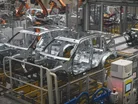
South Africa is positioning itself as a key player in the global EV market by introducing a significant tax incentive to boost the production of EVs and hydrogen-powered vehicles. In a move designed to attract local and international investment, the government has announced a 150% tax deduction on qualifying EV and hydrogen vehicle production investments.
South Africa’s Finance Minister Enoch Godongwana highlighted the government's commitment: "To encourage production of EVs in South Africa, the government will introduce an investment allowance for new investments, beginning 1 March 2026."
The policy taking effect on 1 March 2026 will remain in place until 1 March 2036.
The incentive applies to investments in new buildings, equipment and improvements to existing assets used primarily for EV and hydrogen-powered vehicle manufacturing. However, if the equipment has not been used primarily for this purpose for at least five years, only 50% of its cost will be allowed as a deduction. The allowance is capped at US$26.9m for the 2026/27 tax year.
"[The tax incentive] is a crucial step in attracting investments, fostering innovation and enhancing the sector's growth within South Africa. The sector has been working towards an EV stimulation policy for some time."
The initiative is part of South Africa's broader strategy to transition its automotive industry toward cleaner technologies and maintain its competitiveness in the global market. The move aims to attract particular interest from Chinese manufacturers who are actively exploring opportunities in the country.
The impact of US tariffs on South Africa's EV market
The recently imposed US tariffs on Chinese EVs and components significantly affect South Africa's growing EV industry. While the tariffs present challenges, they could open new opportunities:
Opportunity for market diversification
With higher tariffs on Chinese EVs in the US and EU, South Africa has the potential to emerge as an alternative market. Attracting the business could drive down EV prices locally, making them more accessible to consumers while creating new jobs in the automotive and related industries.
Attracting investment from Chinese manufacturers
Several Chinese EV manufacturers are already showing interest in South Africa. Reports indicate that at least three manufacturers have signed non-disclosure agreements (NDAs) with Naamsa to explore potential investments. The interest aligns with South Africa's push to secure its place in the global EV market.
CHARGE, a company building South Africa's first off-grid national EV charging network, welcomes the initiative. "We appreciate the signing of the 150% tax incentive into law by President Cyril Ramaphosa," the company stated.
No EVs are manufactured in South Africa, but the country is actively working to change that. Several developments signal a strong push toward EV production:
- The Trade Minister has indicated that South Africa will likely produce its first EV in 2026.
- BMW has chosen South Africa as the exclusive production hub for its hybrid X3.
- Existing manufacturers, such as Stellantis, are exploring expanding their production to include new-energy vehicles (NEVs).
Despite these positive steps, as of February 2025, South Africa's automotive industry remains largely focused on internal combustion engine (ICE) vehicles, with 99% of locally produced cars still running on traditional fuel.
Challenges facing South Africa's EV industry
While opportunities abound, South Africa faces several challenges in establishing a strong EV production sector:
Infrastructure and energy issues
- Power shortages and blackouts have occurred due to inefficiencies at Eskom, the government-owned entity responsible for distributing electricity.
- Limited charging infrastructure, with only 62 public charging points across the country.
- Unreliable electricity supply, deterring both manufacturers and consumers from switching to EVs.

Economic and market factors
- High EV costs compared to traditional vehicles, limiting consumer demand.
- Significant investment requirements for BEV manufacturing and infrastructure.
- Potential loss of key export markets, like the UK and EU, which plan to ban ICE vehicles by 2035.
Technical and workforce challenges
- Shortage of skilled labour necessary for EV production.
- Need for investment in technical education to train a qualified workforce.
Policy and regulatory uncertainty
- Uncertainty regarding long-term government policies on EVs.
- Legacy focuses on fossil fuels, slowing down innovation in the EV sector.
Supply chain and raw materials constraints
- Challenges in securing battery raw materials.
- Need for a regional battery supply chain to reduce reliance on imports.
Introducing South Africa's EV tax incentive is a bold step toward transforming the country's automotive sector. While US tariffs on Chinese EVs are reshaping global supply chains, South Africa has a unique opportunity to become a competitive EV manufacturing hub. However, to fully realise the potential, further investment in infrastructure, policy alignment and industry collaboration is crucial.
Stay informed and inspired with the EV Magazine community by signing up for our free weekly newsletter. Each week, receive in your inbox the latest industry news and in-depth insights into the world of electric vehicles, sustainability and cutting-edge innovations
Subscribe now, don’t miss the opportunity to stay ahead in the fast-evolving EV industry.
EV Magazine is a BizClik brand.