
Proteus: The Future of Autonomous Military Helicopters
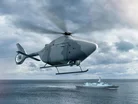
Engineers in Somerset, UK, are pioneering a cutting-edge helicopter capable of flying independently without human control. Developed by Leonardo Helicopters UK in Yeovil as part of a research initiative for the Royal Navy, the project has the potential to transform military aerial operations.
The Proteus: A world first in autonomous flight
By design, the Proteus experimental helicopter operates autonomously, executing missions without human intervention. Nigel Colman, Managing Director of Leonardo Helicopters UK, highlights the core objective: "It's about not putting people in harm's way." Unlike previous uncrewed helicopters that required remote piloting, Proteus is believed to be the first of its kind globally, capable of true autonomous flight. The development represents a significant step forward in aviation technology.
While helicopters are often associated with combat missions, many flights involve routine but essential tasks such as cargo transport between ships or from ship to shore. Nigel, a former RAF navigator and air vice-marshal, elaborates:
"People like me spend decades flying dull, dirty and dangerous missions. If we don't have to risk life, we can fly this for eight hours; it doesn't need feeding, it doesn't need a bed. There is so much the Navy can do with it."

Advanced autonomous capabilities
By design, the Proteus undertakes a variety of critical operations, including deploying sonar buoys for submarine detection. The vision is for the helicopter to take off from a Royal Navy frigate, navigate to a designated location, release high-tech buoys and return to the flight deck—all without human intervention.
Nigel explains: "It's going to operate itself. Nobody is standing there with a remote control round their neck, pressing buttons."
By design, the Proteus adapts to changing mission conditions. It can reroute to avoid threats, navigate around obstacles and respond to unforeseen challenges. Software simulations have demonstrated its ability to recognise and manoeuvre around structures such as oil rigs.
A legacy of innovation in British aviation
Leonardo's Yeovil factory has been at the forefront of helicopter manufacturing for 80 years, producing more than half of the helicopters used by the British armed forces. The Proteus project continues this heritage of excellence.
A collaborative effort
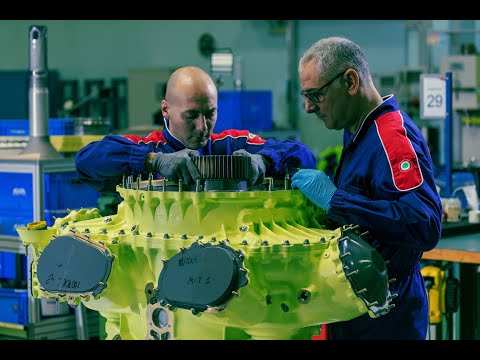
The project combines high-tech engineering with traditional manufacturing expertise. Tom Spencer, an aircraft technician, is excited: "It's something different from your usual work; it's a new project for our company, so it's something that no one else has worked on before."
Victoria Thorpe, Procurement Programme Leader at Leonardo, adds, "It's great to work on something so new and exciting and we are collaborating with lots of local companies that supply us."
Although Proteus is primarily a research initiative, its development reflects the increasing reliance on automation in military technology.
"Militaries are increasingly relying on automation and machine learning to really do the job that would be particularly dangerous, so trying to remove the individual risk."
The first flight of the Proteus is expected to take place at an undisclosed location "in the summer". Despite the technical challenges, the team remains confident. Nigel affirms: "We'll programme it, it will do its thing, it will complete its mission, simple as that."
How proteus navigates and operates
The Proteus helicopter represents a significant leap forward in autonomous aviation technology, boasting sophisticated systems enabling it to operate independently. At its core, the aircraft is equipped with advanced software that allows it to make flight decisions without human input, possessing all the necessary data to adjust its course as needed.
The onboard intelligence is complemented by adaptive navigation capabilities, enabling Proteus to reroute to avoid threats, navigate around obstacles and adapt to unexpected situations with remarkable agility.
To achieve this level of autonomy, Proteus relies on a comprehensive suite of sensors. Optical cameras play a crucial role in identifying objects and vessels, while additional systems, likely including radar, further enhance the helicopter's awareness. Before each mission, Proteus is meticulously programmed with pre-set coordinates, mission objectives and operational boundaries, providing a framework for its autonomous decision-making.
The helicopter's ability to autonomously adjust its mission parameters is particularly impressive. It can identify and circumvent structures such as oil rigs and select optimal locations for payload deployment based on real-time assessments. The level of decision-making is crucial for the successful completion of complex missions without human intervention.
Safety was paramount in the development of Proteus and multiple measures were taken to ensure reliable operation. The helicopter's hazard assessment capabilities allow it to detect and reroute around unexpected obstacles and adjust its flight path in response to environmental factors.
These features and its sophisticated onboard systems make Proteus a pioneering example of safe and efficient autonomous aviation technology.
Collision avoidance system
The Proteus helicopter incorporates comprehensive safety features to ensure its autonomous operation remains secure and reliable. Advanced sensors form the backbone of its collision avoidance systems, allowing the aircraft to detect and navigate around obstacles in complex environments. Each mission undergoes meticulous pre-flight programming, minimising risks by following predetermined and optimised flight paths.
Leonardo employs cutting-edge technology in the form of AI-driven synthetic environments and a digital twin to extensively test Proteus's capabilities before real-world deployment.
Developed in strict adherence to aviation safety standards, Proteus meets rigorous requirements for autonomous aircraft. In the event of a system malfunction, the helicopter is expected to have protocols to abort its mission or return to base safely. Initial flight tests will occur in controlled, secure locations, further minimising risks during the crucial development and evaluation phases. These multifaceted safety measures highlight the commitment to ensuring Proteus operates with the utmost safety and reliability in its autonomous missions.
The future of autonomous aviation
Proteus represents a significant milestone in uncrewed flight technology, with potential implications far beyond military applications. Its development marks a shift towards a future where aviation is increasingly driven by autonomous systems, enhancing efficiency and safety across various operations.
Stay informed and inspired with the EV Magazine community by signing up for our free weekly newsletter. Each week, receive in your inbox the latest industry news and in-depth insights into the world of electric vehicles, sustainability and cutting-edge innovations.
Subscribe now, don’t miss the opportunity to stay ahead in the fast-evolving EV industry.
EV Magazine is a BizClik brand.