
Why 10-Year Lithium Deal is Good News for EV Makers

The global push toward electrification continues to reshape international supply chains and manufacturing priorities. For executive leaders across the electric vehicle (EV) manufacturing and mining sectors, the evolution of procurement strategies is a primary concern.
The industry seeks to secure the critical minerals required for battery production. A new partnership between Lilac Solutions and Traxys North America highlights this transition. The two firms have formalised a binding 10-year offtake agreement for lithium carbonate.
Produced at the Great Salt Lake facility in Utah, this move signals a significant change in how critical minerals flow through North American supply networks. Under the terms of the agreement, Traxys will buy 50,000 tonnes of lithium carbonate over a decade.
This volume represents 100% of the planned Phase 1 production capacity. The agreement uses a "take-or-pay" structure, which provided Lilac the financial certainty required for a Final Investment Decision (FID). For the wider EV market, it secures a reliable supply of battery-grade material.

Securing vital battery minerals
The scale of this commitment reflects growing confidence in domestic lithium production. By locking in the entire Phase 1 output, Traxys underwrites the commercial viability of the project while securing its position in a competitive market.
This is particularly relevant for EV manufacturers, which require stable mineral flows to maintain production schedules. Lilac Solutions specialises in Direct Lithium Extraction (DLE) technology, which offers an alternative to conventional methods.
Its proprietary Gen 5 ion exchange technology could improve supply chain speed. Reports indicate the technology delivered an 87% recovery rate during pilot operations. Unlike evaporation ponds, which can take 24 months to yield results, this process works in hours.
For supply chain managers, the speed of DLE could mean shorter lead times and more responsive production cycles. Traditional lithium extraction requires extensive infrastructure and long processing times that create bottlenecks.
Enhancing domestic manufacturing capacity
The Great Salt Lake Phase 1 facility is designed to produce 5,000 tonnes per annum (tpa) of battery-grade lithium carbonate. This facility is expected to nearly double current US production, aiding companies seeking to diversify their supplier base.
A planned Phase 2 expansion aims to bring total capacity to 20,000 tpa of Lithium Carbonate Equivalent (LCE). This growth is essential for meeting the rising demand of the automotive sector as it transitions away from internal combustion engines.
Raef Sully, CEO of Lilac Solutions, explains: "Securing offtake for 100% of planned output moves us closer to construction of a significant new source of domestic lithium." This project provides essential support to battery manufacturing facilities.
For EV manufacturers, the primary challenge to mass adoption has been a fragile and geographically concentrated supply chain. Domestic projects like the Great Salt Lake facility help mitigate these risks by providing a localised source of high-quality materials.
Navigating global supply requirements
In US and European markets, tax credits are frequently tied to the provenance of minerals. Sourcing minerals domestically helps manufacturers meet these requirements while reducing transportation costs and the associated carbon footprint.
The 10-year structure offers a buffer against spot market volatility. This allows for better long-term financial planning and more predictable overheads for companies involved in the production of electric vehicle batteries.
Lilac has completed FEL-3 engineering and is collaborating with Utah regulators to finalise permits. The ion exchange media will be manufactured in Fernley, Nevada, creating a domestic supply chain that benefits the regional economy directly.
This integrated approach reduces dependency on international equipment suppliers. Successful implementation of these technologies could provide a blueprint for how the global EV market manages critical mineral shortages in the future.
Company portals


Executives
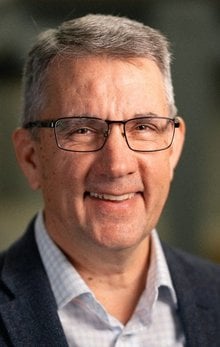
Raef Sully
CEO