
Isuzu & Toyota's Hydrogen Fuel Cell Lightweight Trucks
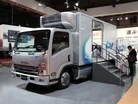
Isuzu Motors Limited and Toyota Motor Corporation have agreed to collaborate on the development toward the mass production of a light-duty fuel cell (FC) electric truck.
Toyota has been investing in fuel cell electric vehicles (FCEVs) for more than 30 years and created the Mirai, considered the most successful hydrogen fuel cell car.
Both companies will jointly develop the system and the companies aim to start production on the fuel cell EV in 2027.

The fuel cell electric truck
The new vehicle will be based on the ELF EV, launched in 2023 and designed using I-MACS3, which is Isuzu's product development platform.
Specs from an earlier EV model of the ELF indicate the vehicles is a rear wheel drive with 6690 mm in length, 2154 mm in width and 3000 mm in height.
The ELF has a maximum loading capacity of 3,000 kg which can be used for deliveries to supermarkets, convenience stores and equipped with refrigeration or frozen storage capabilities.
It adopts Toyota's fuel cell stack, which Toyota says will enhance vehicle durability and extend its service life.
Toyota FCEVs
Toyota began development of hydrogen FCEVs in 1992.
It successfully introduced the Mirai sedan to world markets in 2014 and its updated model, released in 2021, has a driving range of 650 km. Toyota has sold approximately 28,000 units of the Mirai.
Toyota remains committed to developing fuel cell technology and said in a statement it “will continue to accelerate efforts to expand the use of hydrogen and contribute to the realisation of a hydrogen society”.
Powered by hydrogen
Instead of using power from electricity stored in a battery, FCEVs generate their electricity through a chemical reaction between hydrogen and oxygen in a fuel cell stack.
This process that leads to zero emissions apart from water.
One of the challenges of widespread adoption of FCEVs is the high vehicle price point. Isuzu says it is working to reduce costs of its new light FCEV truck by optimising the vehicle body structure and reviewing manufacturing processes.
Toyota’s 2025 fuel cell system
In 2025, Toyota announced that it introduced a new fuel cell system.
Toyota said that the new system was designed to meet the particular needs of the commercial sector with the same durability as conventional diesel-powered engines.
It featured improvements in performance, including fuel efficiency and a significant reduction in costs compared to the prior version.
A focus on hybrids
An outlier in the automotive industry, Toyota performed well in 2025 and retained its position as the world's top automaker, selling 11.3 million vehicles in 2025 according to the American International Automobile Dealers Association.
This success was partly attributed to Toyota's focus on hybrid models, rather than positioning themselves entirely toward BEVs.
Toyota's Chairman has argued hybrids have a better environmental impact than BEVs. In an interview with Automotive news, Akio Toyoda claimed: "We have sold some 27 million hybrids. Those hybrids have had the same impact as nine million BEVs on the road."
Company portals


Executives
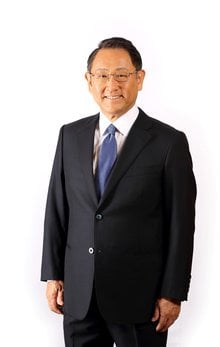
Akio Toyoda
Chairman