
How World EV Day is Transforming Global Electric Transport
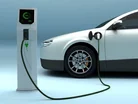
World EV Day has become a global milestone in the journey towards sustainable transport.
Founded by Ade Thomas and his sustainability media company, Green.TV, in partnership with global technology leader ABB, the first celebration took place on 9 September 2020.
Its purpose is simple but powerful, to raise awareness and accelerate the transition to EVs worldwide.

A day of global significance
What began as a single campaign has grown into a movement.
World EV Day unites companies, policymakers and individuals under a common goal, to #DriveChange.
Over the years it has inspired international action, gaining recognition in the UK parliament and even being celebrated by the White House’s top climate advisor.
The scale of its impact speaks volumes.
In 2023, World EV Day achieved more than 200 million impressions on Twitter / X across 119 countries.
Major players came to showcase their progress in e-mobility, like:
- Ford
- Nissan
- Tata
- Volvo Trucks
- ABB
- Parker Lord
- Leaseplan
- EY
- FedEx.
Research at the heart of change
The latest data from Elsevier’s Scopus research and citation database underlines how central innovation has become to the EV transition.
Since 2019, global research on EV batteries has risen by 135%, climbing from 4,728 documents in 2019 to 11,111 in 2024.
Data also shows that China is leading globally with 13,755 publications since 2019, India ranks second with 8,363 publications and the US is third, with 5,329 research outputs.
Elsevier Scopus also found that despite the UK being named the biggest European EV market, research is lagging when compared to Germany. Since 2019, Germany has produced 2,553 publications whereas the UK has 2,275.
This surge highlights both the opportunities and the gaps still to be addressed.
"We can pour billions into gigafactories, charging networks and OEM innovation, but if there aren’t enough trained people to install and maintain those systems safely, the wheels of progress grind to a halt,” says Martijn Gerlag, Field Application Engineer at Fluke Corporation.
“We need a plan to bolster the future of this industry from the ground up with some strong foundation to scale upon.
“Europe doesn’t just need more EVs; it needs a reliable and protected workforce behind them.”
Tackling battery recovery
One of the most pressing challenges is battery recovery.
“Improving EV battery production and critical material recovery will be key to meeting the growing demand for clean transport,” says Giacomo Margiotta-Mills, Industry Director, Transportation & Mobility, Euronorth, Dassault Systèmes.
“With EVs already making up 20% of new car sales, manufacturers must accelerate the move from R&D to market without compromising safety.
“With the electricity demand at an all-time high and resources facing continuous strain, recycling and reusing critical materials from end-of-life batteries will be essential to address this pressure.
“It is up to every industry to consider small, immediate gains, with energy providers and distributors continuing to invest in improved solutions to better capture and manage more energy sources, even those that are highly volatile.”
Although EV adoption continues to grow, research into recycling and reuse of critical raw materials remains limited.
Since 2019, hydrometallurgical recovery of EV batteries has been the subject of only 101 publications.
Elsevier's data shows that number of research publications on hydrometallurgical recovery per metal type from 2019-2024:
- Lithium: 594
Copper: 427
Nickel: 308
Cobalt: 278
Manganese: 175
Aluminium: 388
Graphite: 52.
Such figures reveal a crucial need for more work on sustainable recovery methods, ensuring resources are reused rather than wasted.
From policymakers shaping frameworks to researchers pushing the limits of battery science, from manufacturers investing in innovation to individuals choosing their next car, every decision counts.