
How Nexceris is Boosting EV Battery Safety with LI-ion Tech
Lithium-ion batteries power most modern EVs, as well as energy storage systems, laptops, smartphones, power tools and medical devices.
Their appeal lies in their light weight, high energy density and long lifespan, which make them ideal for portable tech and critical infrastructure.
However, with battery use surging, the risk of dangerous fires is growing too, particularly in sectors like EV infrastructure, data centres and grid-scale storage.
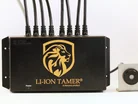
That risk is now being addressed by Honeywell, which has acquired the Li-ion Tamer detection system developed by energy safety company Nexceris.
The technology is designed to detect early signs of thermal runaway, a self-heating, uncontrollable chemical reaction in lithium-ion cells, before a fire can start.

Early detection, early prevention
The safety concerns around lithium-ion batteries are linked to several preventable causes.
These include overcharging, using the wrong charging cable, impact damage or overheating in high-temperature environments.
These can lead to thermal runaway, where a battery cell generates heat faster than it can release it.
This creates a dangerous cycle that can spread through other cells, resulting in fire, explosions or toxic gas leaks.
"As lithium-ion battery use grows rapidly across data centers, EV infrastructure and grid-scale energy storage, the risk of fire is increasing in parallel," says Billal Hammoud, CEO of Honeywell's Building Automation segment.
To counter this, Honeywell is integrating Nexceris's Li-ion Tamer technology into its fire safety systems.
The system monitors for early signs of battery failure by detecting off-gas emissions that precede thermal runaway events, giving up to 30 minutes' warning.
That window can allow operators to take pre-emptive action, stopping fires before they start.
“Li-ion Tamer’s differentiated technology detects battery off-gassing up to 30 minutes before thermal runaway, helping prevent dangerous lithium-ion battery fires," says Chris Ladas, Chief Technology Officer, Building Management Solutions at Honeywell.

"This is a critical capability as demand for energy storage, EV infrastructure and data centres continues to surge.”
The technology now joins Honeywell's Building Automation division, which already offers a suite of life safety tools including smoke detection.
For EVs and energy storage, the new integration means better risk management in sectors where thermal safety is becoming more urgent.
Safety confidence to boost EV adoption
Consumer confidence in EVs and large-format lithium-ion battery installations has been shaken by several high-profile fires.
The drop in trust has affected both the uptake of EVs and purchases of lithium-based stationary storage units.
Nexceris, the company behind Li-ion Tamer, has focused its product development on making lithium-ion systems safer and more trusted in the energy market.
Under Nexceris’s internal testing, battery fires have not occurred when Li-ion Tamer is used.
The company sees its work as directly supporting safe electrification, especially as battery demand is set to grow more than 30% annually, reaching more than US$400bn by 2030.
“Our vision is to create a better world through energy innovations," explains Kyle Shen, CEO of Nexceris.
"We collaborate with leading global customers and partners to transform powerful ideas into solutions that make energy production safer, more efficient and environmentally responsible.
“I am excited for Honeywell to continue growing Li-ion Tamer to make lithium-ion batteries safer.”
Nexceris has specialised in renewable energy and safety technology for more than two years.
Kyle, who has been in the CEO role for more than eight years, has an MBA from the Darden School of Business at the University of Virginia.
His work now finds new scale under Honeywell’s global distribution.
A new chapter for commercial fire protection
The partnership between Nexceris and Honeywell builds on five years of close collaboration.
Honeywell’s acquisition brings the Li-ion Tamer system fully into its portfolio, marking a shift from partnership to ownership.
"Li-ion Tamer's early warning technology has been revolutionary for our customers and partners over the last five years,” says Billal.
“Building on our legacy partnership, the acquisition of this product suite will position Honeywell as a leader in early gas detection and battery fire prevention.
"We expect this tuck-in acquisition to further bolster growth of our fire detection business."
Katie Davis, Chief Technology Officer for Commercial Fire at Honeywell, welcomes the change.
"It's a happy day here in Commercial Fire. I am so proud to welcome the Li-ion Tamer team to the Honeywell Family,” she says.
"“I am looking forward to shaping the future of Fire Detection together.”
By bringing battery detection technology under one roof, Honeywell aims to offer a more complete safety solution to customers navigating the transition to electric-powered systems.
From EVs to data centres, safer lithium-ion battery management is now being treated as core infrastructure, not an afterthought.