Chinese EVs in Europe: Will Minimum Prices Replace Tariffs?
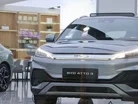
New guidance from the European Commission for Chinese exporters may see minimum prices replace EV import tariffs.
Since October 2024, EVs imported from China to the EU face tariffs of up to 35.3%.
The Commission’s guidance says that minimum price offers must “injurious effects of the subsidies and provide equivalent effect to duties”.
Key details, including the level at which minimum prices will be set, have not been revealed but the move may signal de-escalation after tension in China-EU trade relations.
BYD beat Elon Musk's Tesla for EV sales in 2025 and other Chinese EV makers, like Geely and SAIC Motor, are seeing growth.
European EV makers, like Volkswagen Group and BMW, are competing against the low costs of Chinese-made vehicles and seeing slower growth.

Chinese EVs in the EU so far
In October 2024, the EU increased tariffs on Chinese-built EVs, including 17% on those made by BYD and 35.3% for SAIC, on top of its standard car import duty.
In April 2025, China’s Ministry of Commerce said negotiations on minimum prices would begin immediately.
More than 50,000 BEVs were shipped from China to the EU in January and February of 2025 according to customs data.
Plug-in hybrid vehicles, which are not subject to EU tariffs, saw an astonishing 892% increase to 25,900 units during the same period.
Chinese brands like BYD held 8% of the EU BEV market in 2023, but growth has slowed since the EU’s 2024 tariffs.
Conversely, just 11,499 BEVs were exported from the EU to China in 2023, and projections suggest that this stagnation will persist.
Some Chinese firms are moving to local production in the EU, with a BYD facility in Hungary set for trial production in early 2026.
What the Commission’s new guidance says
A Minimum Import Price (MIP), the guidance says, must be set for each specific model and configuration of EV.
It can be based on the exporter’s previous prices plus the duty margin, or the price of a similar EU-produced BEV.
The guidance says that covering all BEV models under the measures is preferred to limit the risk of price manipulation across different models.
“Any commitment to invest in the BEV-related industries within the EU will be considered and assessed,” the guidance says.
For the Commission to accept an offer of a MIP, the guidance says it must meet several legal and practical standards:
- Adequacy: The offer must eliminate harm caused by subsidies and have an effect equivalent to existing duties.
- Practicability: The Commission must be able to monitor and verify compliance without unreasonable effort.
- Anti-circumvention: The offer must mitigate the risk of "cross-compensation," where companies might lower prices on other products, like hybrids, to make up for the higher BEV prices.
What could minimum prices mean?
Introducing minimum prices on Chinese-manufactured EVs could stabilise market competition by preventing them from underselling EU manufacturers.
However, there are concerns that this move might increase vehicle costs for consumers, potentially stalling EV adoption.
European manufacturers, including giants like Volkswagen and Stellantis, are already grappling with the challenge of China's cost advantages, owing partly to state subsidies, which can inflate EU production costs by 30 to 40%.
German automakers remain wary of tariffs due to potential retaliations that could affect premium exports.
A pricing agreement could also have repercussions for companies like Tesla, which has experienced a drop in European sales.
An increase in sales of Chinese vehicles could exacerbate this trend and diminish Tesla's market position.
Company portals



Executives

Elon Musk
Tesla CEO
Ursula von der Leyen
President