
Battery-Buffered Charging Boosts EV Adoption in Logistics
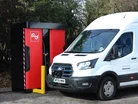
Electrification is transforming logistics, helping supply chain businesses cut emissions, improve efficiency and reduce long-term operating costs.
However, a major challenge is the lack of sufficient grid capacity at fleet depots, making the transition to EVs more difficult. TUAL has tackled this issue by trialing its PowerUp Charger, a deployable, battery-buffered DC fast charger, with Wincanton.
This month-long trial demonstrated how the technology could increase on-site charging capacity by up to 250%, supporting fleet electrification at a site with limited grid power.
The PowerUp Charger enabled 4.9 high-power DC charges per day, compared to just 1.2 low-power AC charges previously. The success of the trial highlights how smart charging innovation can remove barriers to EV adoption in supply chain operations.
Wincanton’s trial with TUAL’s PowerUp charger
TUAL partnered with Wincanton to conduct the trial at one of the company’s e-fleet operating sites in West London.
The charger was used to support 19 medium- and large-sized electric vans, allowing the fleet to charge efficiently despite the site’s constrained grid connection.
A key advantage of the PowerUp Charger is its rapid deployment – it took just 15 minutes to set up and begin delivering high-speed DC charging. The system enables fleet depots to scale their EV operations without waiting years for expensive grid upgrades.
Philip Clarke, CEO and Founder of TUAL, highlights the importance of the project: “Myself and the whole TUAL team are delighted to see Wincanton and its clients benefit from our battery-buffered DC PowerUp Charger technology – successfully delivering the dependable, cost-effective and rapidly deployable fast charging that lies at the core of our mission.
“That undertaking is a critically important one in the shift to sustainable fleet operations; businesses across the UK needing to electrify are faced with sites that don’t have the grid capacity to make an efficient transition possible.
“We’re excited to continue our work in helping fleets to electrify faster, and would like to thank Wincanton for their commitment and passion for innovation in realising that mission.”
By using TUAL’s charging technology, Wincanton moves closer to its goal of achieving net-zero carbon emissions by 2040. The company is aiming to become a leader in sustainable fleet, property and waste management solutions.
Claire Charlton, Head of Innovation at Wincanton, states: “On behalf of the whole Wincanton team, I’d like to extend our thanks to TUAL for their cutting-edge technology and professionalism throughout this pilot.
“Solutions such as TUAL’s are central to making our net-zero ambitions happen, and smart innovation is essential for helping businesses expedite the expansion of their fleet electrification, cost-effectively.
“I would also like to extend my thanks to DfT and Connected Places Catapult for delivering the hugely successful Freight Innovation Fund programme.”
Why smart charging innovation matters
As supply chains and logistics operations transition to EVs, efficient and scalable charging solutions are essential. Grid limitations pose a significant barrier to fleet electrification, with TUAL’s research revealing that 50%-80% of sites looking to electrify lack sufficient grid capacity.
Without viable alternatives, organisations face high costs and long waiting periods for grid upgrades – potentially costing between £150,000 and £3 million, and taking up to three years.
Battery-buffered charging solutions like the PowerUp Charger offer an alternative.
By storing and delivering energy on demand, the system allows businesses to charge EVs without needing major grid upgrades. With a capacity of up to 120kW of high-power DC charging, this technology helps fleet operators improve logistics efficiency while cutting emissions.
- Available on-site capacity rose by up to 250%
- 4.9 high-power DC charges a day
- Takes 15 minutes to unload, install and deliver off-grid DC charging
- 3,138 clean-air miles during its four weeks in operation
- Saved 1,560kg of CO2 during the four weeks
Charging infrastructure must evolve alongside growing EV adoption. Cost-effective, widely available and smart charging solutions will be key to ensuring logistics operations remain efficient as fleets transition to electric power.
Integrating renewable energy sources with charging infrastructure will further enhance sustainability and cut operational costs.
The future of sustainable logistics
The logistics sector is undergoing a major transformation as businesses invest in new technologies to reduce their carbon footprint. While hydrogen and biofuels may play a role in long-haul freight, battery-buffered charging solutions will be critical for fleet electrification, allowing businesses to make the switch without costly grid upgrades.
Overcoming challenges such as infrastructure costs, regulatory gaps and technological integration requires collaboration between industry, policymakers and technology providers.
By working together, businesses can accelerate the shift to a low-carbon, future-ready logistics sector.
TUAL’s PowerUp Charger provides a scalable solution for logistics companies looking to embrace EVs without grid constraints. The Wincanton trial demonstrates how smart charging technology can enhance supply chain sustainability, reduce charging downtime and improve fleet efficiency.
As EV adoption increases, innovations like TUAL’s PowerUp Charger will be essential for making logistics more sustainable.
Stay informed and inspired with the EV Magazine community by signing up for our free weekly newsletter. Each week, receive in your inbox the latest industry news and in-depth insights into the world of electric vehicles, sustainability and cutting-edge innovations.
Subscribe now, don’t miss the opportunity to stay ahead in the fast-evolving EV industry.
EV Magazine is a BizClik brand.