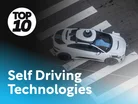
Top 10: Self Driving Technologies
Advanced driver-assistance systems (ADAS) and autonomous driving could create up to US$400bn in revenue in the passenger car market by 2035, according to McKinsey.
Value in mobility is moving away from hardware toward technology companies that build the silicon and the AI algorithms.
Autonomous fleets require high uptime and low maintenance to be profitable, making EV platforms the perfect foundation.
EV Magazine has ranked 10 of the top self driving technologies and companies leading innovation.
10. GM Super Cruise
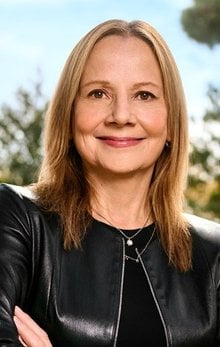
CEO: Mary Barra
Headquarters: Michigan, US
Founded: 1908
GM Super Cruise is an advanced, hands-free Level 2 driving assistance system available on compatible highways.
It uses precision LiDAR map data, GPS and a strict driver attention camera system with infrared eye-tracking.
The company says its customers have driven 700 million miles with Super Cruise without a single reported crash attributed to the system.
In October 2025, GM announced eyes-off driving will debut on the Cadillac ESCALADE I1 electric SUV in 2028.
9. Tesla
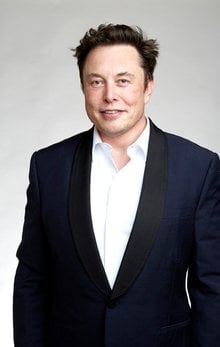
CEO: Elon Musk
Headquarters: Texas, US
Founded: 2003

Tesla's Full Self-Driving (FSD) architecture is an end-to-end neural network that relies entirely on an array of cameras.
The company has the largest fleet of data-gathering consumer vehicles in the world, feeding complex edge cases back to its supercomputers to train the system.
Tesla says that using FSD Supervised is seven times safer than a human driver.
The technology is available in seven countries and its work on an Unsupervised system is supporting the Cybercab, an upcoming two-passenger battery-electric self-driving car.
8. Qualcomm Snapdragon Ride
CEO: Cristiano Amon
Headquarters: California, US
Founded: 1985
Qualcomm Snapdragon Ride is a comprehensive, scalable system-on-a-chip and software stack designed to support everything from basic Level 1 ADAS to fully autonomous Level 4 driving.
It delivers AI computing power while consuming very little energy to help maximise EV battery range.
The AI-enabled Snapdragon Ride Pilot Automated Driving System has been developed in partnership with BMW for the iX3.
Dr. Mihiar Ayoubi, Senior Vice President Development Driving Experience at BMW Group, explains: “This collaboration has enabled us to develop a cutting-edge driver assistance system, setting a new benchmark.”
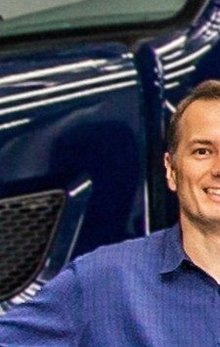
7. Aurora Driver
CEO: Chris Urmson
Headquarters: Pennsylvania, US
Founded: 2017

Aurora Driver is a Level 4 autonomous system designed to be integrated into multiple vehicle types, including heavy-duty Class 8 commercial freight trucks.
It uses proprietary FirstLight FMCW LiDAR, which can see far and measure the velocity of objects instantly.
Derek Leathers, CEO of Werner Enterprises, says: “The hybrid model of Werner professional drivers and the Aurora Driver will bring exemplary service to our customers while we continue to enhance the critical and long-haul routes that they demand.”
6. Wayve
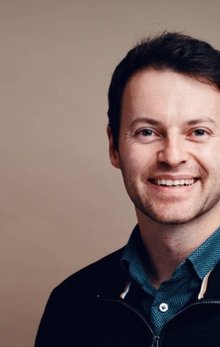
CEO: Alex Kendall
Headquarters: London, UK
Founded: 2017
Wayve has created AV2.0, an embodied AI approach using end-to-end deep learning.
Instead of relying on hand-coded rules and pre-mapped HD environments, the AI learns to drive entirely from data, mostly using camera inputs.
The firm is working with Nissan to develop its next-generation ProPILOT integrated with Wayve AI.
Ivan Espinosa, President and CEO of Nissan, says: “The widespread adoption of our next-generation ProPILOT integrated with Wayve AI will deliver safer, more intuitive and more comfortable driving experiences to customers worldwide, while accelerating the transition toward an intelligent mobility future.”
5. Zoox
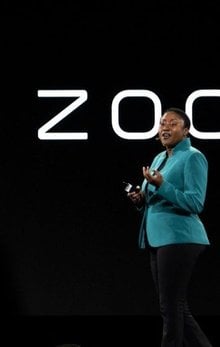
CEO: Aicha Evans
Headquarters: California, US
Founded: 2014

Zoox is an Amazon-backed, purpose-built, fully electric robotaxi business.
The vehicle is completely symmetrical, bi-directional and does not have a steering wheel or traditional driver controls.
Rather than retrofitting an existing car with sensors, Zoox built a vehicle from the ground up specifically for autonomous ride-hailing.
In 2025, it welcomed its first public riders in both Las Vegas and San Francisco.
We have seen incredible interest in Zoox in this market and are excited about this first step to bring our purpose-built robotaxi experience to more people,” says Zoox CEO Aicha Evans.
4. Mercedes-Benz DRIVE PILOT
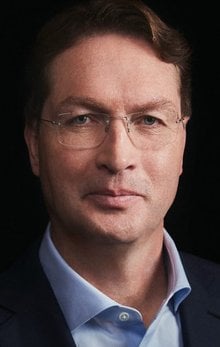
CEO: Ola Källenius
Headquarters: Stuttgart, Germany
Founded: 1926
DRIVE PILOT is a highly advanced conditional automated driving system relying on a redundant architecture of LiDAR, radar, cameras and moisture sensors.
It is the first internationally certified SAE Level 3 system for consumer vehicles.
In specific conditions, like dense highway traffic under a certain speed, the driver can legally take their eyes off the road and Mercedes-Benz assumes legal liability for the vehicle's driving behavior.
At CES 2026 in Las Vegas, Mercedes-Benz presented MB. DRIVE, developed in partnership with NVIDIA.
MB. DRIVE ASSIST PRO provides advanced SAE Level 2 support using around 30 sensors.
3. NVIDIA Drive Thor
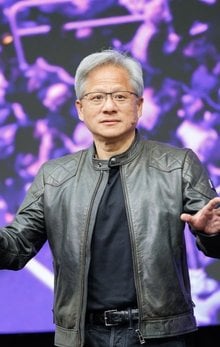
CEO: Jensen Huang
Headquarters: California, US
Founded: 1993

Drive Thor is a centralised car computer that unifies autonomous driving, ADAS and in-cabin AI into a single computing platform.
It offers computing power capable of running massive, complex AI models natively inside the vehicle.
This system is used by many companies including Aurora, BYD, Mercedes-Benz, Zoox and Wayve.
NVIDIA has also announced the Alpamayo family of open-source AI models and tools, including chain-of-thought, reasoning-based vision language action (VLA) models.
“The ChatGPT moment for physical AI is here — when machines begin to understand, reason and act in the real world,” said Jensen Huang, founder and CEO of NVIDIA.
“Robotaxis are among the first to benefit. Alpamayo brings reasoning to autonomous vehicles, allowing them to think through rare scenarios, drive safely in complex environments and explain their driving decisions — it’s the foundation for safe, scalable autonomy.”
2. Baidu Apollo Go
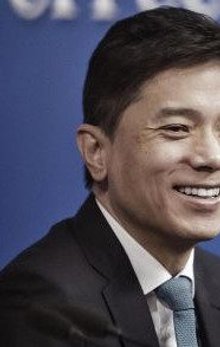
CEO: Robin Li
Headquarters: Beijing, China
Founded: 2000
Apollo Go, also known as Luobo Kuaipao, is Baidu's autonomous ride-hailing platform, using Level 4 autonomous technology deployed on specially designed, low-cost robotaxis.
Baidu pairs its advanced AI with government infrastructure support in China, using V2X communication where the car talks directly to traffic lights and smart roads.
It has expanded to 22 cities and provided 17 million total rides.
Baidu’s first international Apollo Go service was launched in Abu Dhabi, UAE in January 2026.
It is also partnering with Uber to launch in Dubai to support the city’s goal of having 25% of all transportation trips be autonomous by 2030.
“We’re excited to partner with Baidu as we continue to grow our autonomous footprint across Dubai,” says Sarfraz Maredia, Global Head of Autonomous at Uber.
“Just as we helped millions of people try out EVs for the first time, we will expand consumer access to autonomous technology in major cities around the world.”
1. Waymo
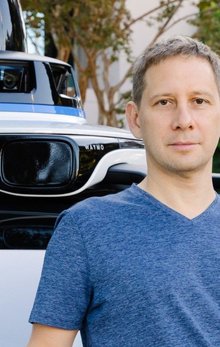
Co-CEOs: Tekedra Mawakana and Dmitri Dolgov
Headquarters: California, US
Founded: 2009

The Waymo Driver is a Level 4 autonomous system that relies on a tightly integrated suite of custom-built LiDAR, radar, high-resolution cameras and deep learning software to operate robotaxis without a human driver.
The company operates fully autonomous, commercial, 24/7 robotaxi services in six major US cities and is planning to expand further.
More than a hundred million fully autonomous miles have already been completed on public roads across more than 10 million paid rides.
In 2026, Waymo plans to launch its service in London, UK in collaboration with its fleet operations partner Moove.
“We’re thrilled to bring the reliability, safety and magic of Waymo to Londoners,” says Waymo Co-CEO Tekedra Mawakana.
“Waymo is making roads safer and transportation more accessible where we operate.
“We’ve demonstrated how to responsibly scale fully autonomous ride-hailing and we can’t wait to expand the benefits of our technology to the United Kingdom.”






Executives
Aicha Evans
CEO
Alex Kendall
Co-Founder & CEO
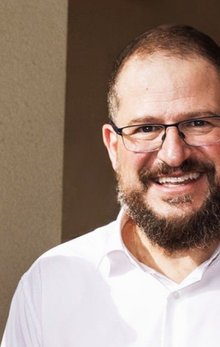
Chris Urmson
CEO and co-founder
Cristiano R. Amon
President and Chief Executive Officer
Dmitri Dolgov
Co-CEO
Elon Musk
Tesla CEO
Jensen Huang
Founder and CEO
Mary Barra
CEO
Ola Källenius
CEO
Robin Li
CEO

Tekedra N. Mawakana
Co-Chief Executive Officer (CEO)