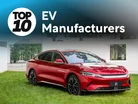
Top 10: EV Manufacturers
The global EV manufacturing landscape has undergone a seismic transformation over the past decade, and the pace of change is only accelerating.
Once dominated by a handful of legacy automakers cautiously dipping their toes into electrification, the industry is now a battleground contested by aggressive Chinese startups, reinvented Western giants and vertically integrated conglomerates wielding supply chain advantages that would have seemed unimaginable just ten years ago.
China has emerged as the unquestioned centre of gravity for EV production and innovation, commanding the majority of global output and export growth. Meanwhile, European and American manufacturers are racing to defend market share on their home turf.
Battery technology, software capability and manufacturing cost efficiency have become the new axes of competition.
In this Top 10, we rank the leading manufacturers shaping this industry's present and defining its future.
10. Xpeng
CEO: He Xiaopeng
Headquarters: Guangzhou, China
Country: China

Xpeng, has carved out a reputation as one of China's most technologically ambitious electric vehicle makers.
Founded in 2014, the company has staked its identity on advanced driver-assistance systems and smart cockpit technology, targeting tech-savvy Chinese consumers who demand more than just an EV.
Xpeng's P7 sedan and G6 SUV have been standout models, helping the brand compete toe-to-toe with domestic rivals. After a rocky mid-period of restructuring and strategic pivots, Xpeng partnered with Volkswagen in a landmark deal that validated its technology stack.
9. AITO
Chairman & Founder: Xinghai Zhang (Seres)
Headquarters: Shenzhen, China
Country: China
AITO is one of the most fascinating entrants in the global EV race, establsihed from a partnership between tech giant Huawei and automaker Seres.
Huawei's deep involvement in software, connectivity and its proprietary HarmonyOS cockpit system has given AITO vehicles a distinctly tech-forward identity that resonates powerfully with Chinese consumers.
The M5, M7 and M9 models have achieved remarkable sales momentum, with the M9 becoming a prestige statement for affluent buyers who want Silicon Valley-style innovation in a Chinese luxury SUV.
8. NIO
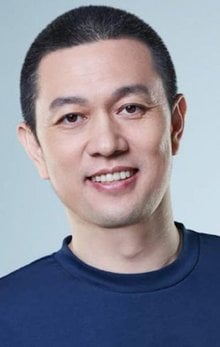
CEO: William Li (Li Bin)
Headquarters: Shanghai, China
Country: China
NIO entered the EV arena with a bold proposition: premium electric vehicles backed by a lifestyle ecosystem, complete with battery-swap stations, luxury NIO Houses and a fiercely loyal user community.
The Shanghai-based automaker, often drawing comparisons to Tesla for its aspirational positioning. Its ET7 sedan and ES8 SUV have won critical acclaim and its battery-as-a-service model, where customers can swap a depleted battery for a full one in minutes, remains a genuinely innovative answer to range anxiety.
With a loyal customer base, deep technology investments, and a new mass-market sub-brand called Onvo, NIO remains a company worth watching closely.
7. BMW
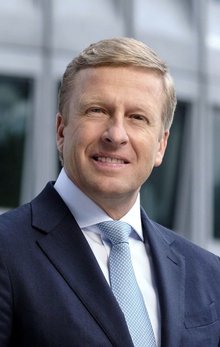
CEO: Oliver Zipse
Headquarters: Munich, Germany
Country: Germany
BMW has made one of the most credible transitions of any legacy automaker into the EV era. The Bavarian brand's i-series, headlined by the iX SUV and i4 gran coupe, has demonstrated that electrification need not come at the cost of the driving dynamics that have defined BMW for decades.
The company has invested billions in its Neue Klasse platform, a dedicated EV architecture set to underpin a wave of next-generation models. BMW's approach has been disciplined: it has avoided going all-in on full electrification prematurely while still delivering compelling battery-electric vehicles today.
Its premium positioning has also afforded it stronger margins than volume-focused rivals. As the Neue Klasse rollout gathers pace, BMW is increasingly seen as the legacy European brand best equipped to challenge Tesla at the high end of the market.
6. Volkswagen
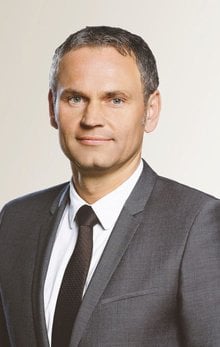
CEO: Oliver Blume
Headquarters: Wolfsburg, Germany
Country: Germany
Volkswagen's EV transformation stands as one of the most ambitious and consequential pivots in automotive history. The ID. series, built on the purpose-designed MEB platform, represents a genuine clean-sheet rethinking of how the world's second-largest automaker builds cars.
The platform is already proving its worth, licensed to Ford and underpinning a growing family of vehicles across multiple brands.
CARIAD, the group's in-house software division, has navigated a steep learning curve and is now delivering a maturing, proprietary platform that gives Volkswagen something most legacy rivals lack: true software ownership.
The group's brand portfolio, spanning VW, Audi, Porsche and SEAT, offers unmatched reach across every price point and customer segment, while its vast global manufacturing footprint provides scale and cost leverage that no EV startup can replicate.
5. Leapmotor
CEO: Zhu Jiangming
Headquarters: Hangzhou, China
Country: China
Leapmotor may be the least familiar name on this list to Western audiences, but it is a brand that is rapidly changing the economics of EV manufacturing.
A landmark partnership with Stellantis has given Leapmotor a critical gateway into European markets. Leapmotor moves fast, keeps costs low and scales aggressively before the competition can respond.
4. Wuling
CEO: Operated under SAIC-GM-Wuling (SGMW) joint venture
Headquarters: Liuzhou, China
Country: China
Wuling has achieved something that eluded every premium automaker and well-funded startup in the EV era: it cracked the mass market. The Hongguang Mini EV, compact, practical and affordable, became one of the best-selling electric vehicles on the planet, briefly outselling Tesla's Model 3 in China and demonstrating that the fastest path to widespread EV adoption runs through affordability.
Built on the robust foundations of the SAIC-GM-Wuling joint venture, the brand combines global engineering expertise with deep local market intelligence, producing vehicles that are precisely calibrated to how millions of urban Chinese consumers actually live and commute.
3. Geely
CEO: Eric Li (Li Shufu, Founder and Chairman); Gui Shengyue (CEO of Geely Auto Group)
Headquarters: Hangzhou, China
Country: China
Geely is the most strategically complex EV player on this list. Through its parent holding company, Geely controls Volvo Cars, Polestar, Lotus, London Electric Vehicle Company and a significant stake in Mercedes-Benz, as well as Chinese brands including Zeekr, Lynk and Co and Galaxy.
This breadth gives Geely unrivalled technological cross-pollination opportunities, allowing EV architectures, software, and powertrains to be shared across multiple brands simultaneously.
Zeekr in particular has emerged as a serious premium EV contender with genuinely impressive products. Geely's global mindset, financial firepower and manufacturing scale make it one of the most formidable forces shaping the industry's electric future, even as it navigates the complexity of managing so many distinct brands.
2. Tesla
CEO: Elon Musk
Headquarters: Austin, Texas, US
Country: US
Tesla is the company that made EVs desirable, aspirational and critically, mainstream. Whatever happens next in the electric vehicle industry, Tesla has played a significant role in forcing the entire automotive world to take electrification seriously.
The Model 3 and Model Y have been among the best-selling cars of any kind globally, and Tesla's Supercharger network became the de facto gold standard for charging infrastructure.
Tesla remains the benchmark against which every other EV maker measures itself.
1. BYD
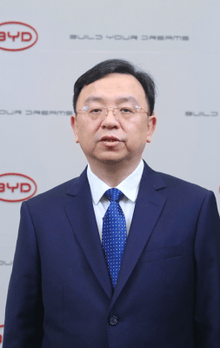
CEO: Wang Chuanfu
Headquarters: Shenzhen, China
Country: China
BYD is the most important electric vehicle company in the world right now. The Shenzhen-based manufacturer, whose name stands for Build Your Dreams, surpassed Tesla in global EV sales.
BYD's dominance stems from a uniquely integrated model: it manufactures its own batteries through FinDream Battery, produces its own semiconductors and controls vast swathes of its supply chain in a way that gives it cost and reliability advantages no rival can easily replicate.
Its Blade Battery technology has set a new standard for safety and energy density, while its DM plug-in hybrid system has captured buyers not yet ready to go fully electric.
BYD now sells across Europe, Southeast Asia, Latin America, and beyond, with an expanding model range from budget city cars to the luxury Yangwang brand. It is the EV industry's undisputed number one.


Executives
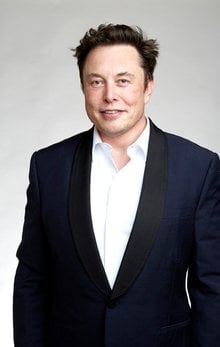
Elon Musk
Tesla CEO
Oliver Blume
CEO
Oliver Zipse
CEO
Wang Chuanfu
CEO
William Li
CEO