Why Elon Musk is Building AI Chip Factories for Tesla

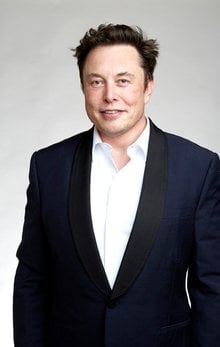
Elon Musk, CEO of Tesla, xAI and SpaceX, has revealed intentions to build two major specialised semiconductor fabrication plants.
Tesla EVs are equipped with xAI's Grok AI assistant and the company's work on robotaxis and Optimus, a humanoid robot, also make use of AI.
The initiative falls under Terafab, a partnership between xAI, Tesla and SpaceX.
In a statement on X, Elon said: "Terafab will technically be two fabs, each making only one chip design.
"This greatly simplifies process flow and allows more linear, adjacent movement of the FOUP (Front Opening Unified Pod)."
Domestic chip production
During the Terafab launch event in Texas, Elon outlined the scope of the project: "We are starting off with an Advanced Technology Fab, here in Austin.
"In the Advanced Technology Fab we will have all of the equipment necessary to make a chip of any kind."
The facilities are designed to handle every stage of chip production internally.
The plants will manufacture semiconductors for Tesla vehicles, humanoid robots and space-hardened chips for AI satellites.
Elon said at the event: "To the best of my knowledge this doesn't exist anywhere else in the world."

Onshore manufacturing push
US President Donald Trump has introduced incentives and threatened penalties for companies that outsource manufacturing in an effort to strengthen domestic production.
Major technology firms, including Apple, have relocated certain production elements to the US in response to these policy shifts.
Musk confirmed that the AI chip manufacturing facilities will be established in Texas, where he maintains existing operations for xAI and Tesla.
Supply chain constraints
Speaking at the Austin announcement, Elon explained: "This announcement is about solving the key missing ingredient.
"To give you a sense of what we are talking about, the current output of AI compute is roughly 20 gigawatts per year... all of the rest of the output from earth is about 2% of what we need.
"We certainly want our existing supply chain to be clear. We are very grateful to our existing supply chain. To Samsung, TSMC, Micron and others. And we would like them to expand as quickly as they can. And we will buy all of their chips.
"I have said these exact words to them. But there's a maximum rate at which they're comfortable expanding. But that rate is much less than we would like."
According to McKinsey, the semiconductor market was valued at US$775bn in 2024 and could potentially reach US$1.6tn (ranging from US$1.5tn to US$1.8tn) by 2030.
Semiconductor manufacturers face multiple challenges including ongoing geopolitical uncertainties, material and talent shortages, supply chain disruptions and rapid technological advancement.
According to Morningstar, critical mineral supply chain risks are emerging as chipmakers encounter rising demand for semiconductors driven by the AI expansion, with data centre requirements already creating shortages for other products such as laptops and cars.