
What is Trump's Deep Sea Strategy for Critical Minerals?
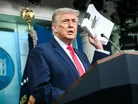
A succession of policy announcements during late January and early February 2026 has seen the Trump administration launch a campaign linking deep-ocean mineral extraction to US industrial security.
Through the deployment of a US$12bn financial package alongside an aggressive regulatory approach, the administration could be setting itself up to contest China's control over the critical minerals market.
Project Vault was unveiled on 2 February, an initiative funded largely through a US$10bn US Export-Import Bank loan.
This programme aims to establish a reserve for minerals including cobalt, nickel and rare earths.
US President Donald Trump characterised the project as a civilian equivalent to the Strategic Petroleum Reserve, designed to shield companies such as General Motors (GM) and Google from what he described as Chinese "price manipulation and supply shocks."
In 2025, President Trump positioned deep-sea mining as critical to national security and economic competitiveness: "For too long, we have let China hold our industries hostage.
"They think they can turn off the lights on our auto plants and our defence systems whenever they want. Not on my watch. We're going to 'Mine, Baby, Mine' – from the mountains to the deepest parts of the ocean floor."
He continued on Truth Social: "We are creating a strategic vault that will make our country richer and more secure than ever before. If the UN wants to hold meetings in Jamaica to discuss 'codes' while we secure our future, let them. We're moving forward."
Adam Muellerweiss, President of the Responsible Battery Coalition, adds: "Project Vault is exactly the kind of serious, industrial-strength action America needs right now. In 2024, this idea would have been unthinkable."
Accelerated permit processes
To provide resources for Project Vault, the administration has directed focus towards the seabed.
On 21 January 2026, the National Oceanic and Atmospheric Administration (NOAA) completed a 113-page regulation allowing US firms to accelerate deep-sea mining authorisations.
The regulation amends the Deep Seabed Hard Mineral Resources Act of 1980.
Previously, companies were required to submit exploration and commercial recovery permits as separate applications, but they can now file both simultaneously, potentially shortening the timeframe by multiple years.
"This consolidation modernises the law and supports the America First agenda," says NOAA Administrator Neil Jacobs.
The choice to employ a 1980 domestic law for issuing permits in international waters, bypassing the UN's International Seabed Authority (ISA), has sparked diplomatic tension.
The ISA, which has invested years in constructing a global mining code, characterises the unilateral move as "surprising" and warns it "sets a dangerous precedent that could destabilise the entire system of global ocean governance".
The US has not ratified the UN Convention on the Law of the Sea (UNCLOS).

Ecological impact
The shift towards commercial seabed extraction has prompted concern amongst marine researchers.
The deep sea has not faced commercial exploitation previously and understanding of its ecosystems remains incomplete.
Sabine Gollner, a marine biologist, warns that once polymetallic nodules are removed, "all biodiversity and functions directly dependent on the minerals will be lost for millions of years."
These worries have grown following the identification of "dark oxygen" produced by seafloor nodules without sunlight.
Environmental campaigners contend that mining activities could destroy this process completely.
Scientists warn that extraction operations could generate sediment plumes that spread across thousands of square kilometres, smothering marine life and disrupting food chains that extend from the ocean floor to surface waters.
The long-term impacts remain largely unknown, with recovery periods potentially spanning centuries or millennia.
Pacific territories
The "Blue Frontier" initiative faces opposition from US Pacific territories.
Officials from American Samoa, Guam and the Northern Mariana Islands, representing both Republican and Democratic parties, have demonstrated unified resistance.
As the Bureau of Ocean Energy Management moves to lease millions of acres of Pacific waters, local representatives have voiced concerns that indigenous populations are being excluded from the decision-making framework.
Territorial governors have emphasised that Pacific Islander communities maintain deep cultural and spiritual connections to the ocean, viewing it as a source of identity and sustenance rather than merely an extractive resource.
They argue that federal mining permits threaten traditional fishing grounds and could irreversibly damage marine ecosystems that island economies depend upon.
Several indigenous groups have filed legal challenges, claiming the administration has violated consultation requirements under federal law.
Company portals


Executives

Adam Muellerweiss
President