
What Does China’s Hidden Door Handle Ban Mean for EV Makers?
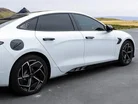
China has become the first nation to officially ban concealed door handles on electric vehicles, a move that directly challenges a look made popular by Tesla and adopted across the premium EV sector.
According to new safety protocols issued by the Ministry of Industry and Information Technology (MIIT), all cars sold in the Chinese market must now feature a mechanical release accessible from the interior and exterior.
It follows a series of high-profile, fatal incidents where power failures during crashes prevented electronic handles from deploying, trapping occupants inside burning vehicles.
From market leader to global rule-setter
The implications of the ban extend beyond China’s borders, triggering a change in automotive regulation.
For decades, Europe and the US dictated global safety norms, but China’s dominance in the EV supply chain is granting it new legislative influence.
Bill Russo, founder of the Shanghai-based consultancy Automobility, says: “By moving first, Beijing can use its huge domestic market to lock in safety standards that both Chinese and foreign automakers must follow at home – and that may ultimately travel with Chinese EV exports and influence global norms.”

Legislative milestones and the road to 2029
The transition to mechanical handles follows a two-year consultation period involving industry stakeholders and research institutes.
Key dates include:
- July 2024: A safety taskforce including CATARC, Geely and Li Auto begins preliminary studies on door handle vulnerabilities
- September 2024: International carmakers join the first taskforce meeting to discuss global design discrepancies
- March 2025: Specific mechanical requirements are established, prioritising physical operational space
- September 2025: Draft proposals are finalised, mandating a recessed space of at least 6cm by 2cm for exterior grips
- January 2026: Regulations are adopted
- January 2027: New rules take effect for all new model approvals
- January 2029: Final deadline for existing approved models to implement design changes.
Financial burden of redesigning luxury platforms
For manufacturing executives, the cost of compliance is substantial.
Industry sources suggest that retrofitting existing EV platforms could exceed US$16m per model.
The impact is acute for higher-margin luxury models, such as Tesla’s Model 3 and Model Y, BMW’s iX3 and premium offerings from Nio and Xpeng.
Approximately 60% of the top-selling new-energy vehicles in China currently feature concealed handles.
Navigating technical trade-offs in emergencies
The mandate requires a physical recessed area on the door’s exterior to ensure a hand can grasp the handle in an emergency.
This nullifies current workarounds like backup "door batteries" or hidden mechanical pull-cables.
While some foreign carmakers argue that integrated manual-electric systems – where a "hard yank" triggers a release – are sufficiently intuitive, the Chinese regulator has opted for a single mechanical standard.
This approach aims to eliminate ambiguity during high-stress rescue scenarios, such as the fatal Xiaomi SU7 crashes in 2025 that intensified public scrutiny of electronic-only latches.
China’s expanding oversight of advanced vehicle tech
The door handle ban is expected to be the beginning of a broader regulatory crackdown on advanced vehicle technologies.
Authorities are also considering limits on standstill acceleration speeds and heightening oversight of advanced driver-assistance systems (ADAS).
Leading Chinese firms including Geely and BYD have already begun reverting to traditional exposed handles on certain models to stay ahead of the curve.
Tesla has said it will make the necessary changes for the Chinese market.