Tesla to Pay US$243m Over Fatal Autopilot Crash Ruling
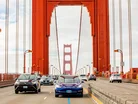
Tesla is facing a turbulent chapter as it grapples with a legal setback.
A Florida jury has mandated the electric vehicle pioneer to compensate US$243m due to defects in its Autopilot feature implicated in a deadly 2019 crash.
This development complicates Tesla's ambitious efforts to roll out autonomous driving technology and expand its robotaxi service.
The case revolves around an incident in which the Tesla Model S, driven by George McGee in Autopilot mode, failed to detect a stationary Chevrolet Tahoe.

While George was momentarily distracted, the vehicle did not auto-correct its path, culminating in a catastrophic collision that killed Naibel Benavides Leon and left her companion, Dillon Angulo, seriously injured.
Despite Tesla's assertion that George McGee's negligence was the sole cause, the jury found a defect in Tesla's Autopilot system, holding the company partially accountable.
This verdict undermines Tesla's stance that its vehicles' self-driving capabilities require diligent driver oversight.
“The fantasy that automated longitudinal and lateral vehicle control equates to ‘self-driving’ is shattered; that the driver alone bears culpability for activating such software and the OEM is blameless,” says Colin Barnden, Principal Analyst at Semicast Research.
Implications for autonomous driving
Elon Musk's vision of equipping Tesla's fleet with self-driving capabilities is under scrutiny as regulatory bodies assess the safety of autonomous vehicles.
According to Mike Nelson, a legal expert specialising in mobility, public and regulatory scrutiny could intensify, potentially delaying approvals for Tesla's autonomous services across multiple states, including California, Nevada, Arizona and Florida.
"The public perception of this verdict or things like this are going to fuel pressure on regulators to say, 'We just can't let this stuff be launched without a lot more due diligence'," says Mike Nelson, Founder of Nelson Law and an expert on legal issues in the mobility sector.
The ambition to make fully self-driving robotaxis a reality for half of the US by year-end is now more challenging.
"The timing for Tesla in light of the FSD rollouts and robotaxis is awful," says Aaron Davis, Co-Managing Partner at law firm Davis Goldman.
He adds: "Now there's essentially an opinion that some aspect of Tesla's business is not safe and maybe the safety that the company advertises isn't what it's cracked up to be."
Future trajectory of Tesla's EV strategy
This legal ruling arrives at a critical juncture for Tesla, as the demand for its existing EV lineup dwindles.
The company has concentrated efforts on introducing innovative autonomous features to revitalise sales and sustain its market presence.
Tesla's market valuation hinges significantly on its successes in AI and robotics integration, making these legal hurdles particularly daunting.
Musk's experimentation with a limited robotaxi initiative in Texas, utilising supervised Model Y SUVs, showcases Tesla's desire to pioneer zero-driver vehicles.
However, the 2019 crash verdict underscores the complexities and potential setbacks Tesla faces in reaching full autonomy.
The fantasy that automated longitudinal and lateral vehicle control equates to ‘self-driving’ is shattered; that the driver alone bears culpability for activating such software and the OEM is blameless. The responsibility genie is now well and truly out the bottle.
Anticipating regulatory challenges
While Tesla's FSD technology has evolved since the 2019 incident, the current verdict signifies continued federal examination and recalls concerning autonomous collisions.
"It's going to take time to get regulators to move forward and time being more than the end of the year," says Gene Munster, Managing Partner at Deepwater Asset Management, a Tesla investor. "From an image standpoint, it's a black eye."
Missy Cummings, Professor of Robotics & AI at George Mason University, says: "As the AI expert on this case, I am glad to see this outcome. This verdict is not only a win for the victims but all of automotive safety. My heart goes out to Naibel Benavides’s family — no amount of money can ever bring her back but they can be assured their legal fight will save other lives.”