
Supply Chains & Stability: Why Toyota is Looking Beyond BEVs
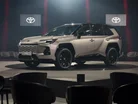
Toyota is broadening its supply chain, adopting a multi-pathway strategy that prioritises diversification over singular focus.
Through the creation of a varied product portfolio, the company is establishing resilience against market volatility rather than concentrating its investment in a single area.
With this strategy, it hopes to secure customer trust and adapt to evolving market dynamics and potential vulnerabilities.
The Japanese multinational automotive manufacturer employs more than 390,000 people globally.
It operates in more than 170 countries and territories, maintains 72 manufacturing facilities and runs 20 design and research and development centres worldwide.

Multi-pathway strategy
At the centre of this approach is a multi-pathway strategy, offering customers various sustainable and accessible options rather than concentrating manufacturing capabilities on a single vehicle type.
Toyota seeks to serve its global customer base regardless of geographical location.
This approach leads to the development of diverse powertrains, from innovative fuel cell sedans in Japan to flex-fuel hybrids in South America.
The company tailors its production approach to align with regional consumer preferences.
In Europe, BEV sales rank among the world's highest, prompting the company to increase BEV production in this region.
Through this adaptive strategy, Toyota achieved a record sales figure of 1.2 million vehicles across Europe.
Simon Humphries, Chief Branding Officer and Board member of Toyota Motor Corporation, explains: "It's about all customers feeling they are empowered to make the right choice for themselves.
"Providing choice and opportunity is at the heart of ever-better cars and everything we do - and that includes the path to sustainability."
Mitigating supply disruption
Sustaining a varied vehicle portfolio and also functions as a strategic resilience measure.
As EV demand rises, mining companies globally are encountering challenges in meeting requirements.
Should mines fail to extract battery-grade cobalt and lithium at sufficient speed, a shortage could cause disruptions.
The concentration of critical mineral extraction in specific geographical regions presents additional supply chain vulnerabilities.
Political instability, regulatory changes and environmental concerns in mining regions could further impact the availability of essential battery materials.
By maintaining a diversified approach to vehicle electrification, Toyota reduces its dependency on any single supply chain and mitigates exposure to these geopolitical and environmental risks.

Through Toyota's range of hybrid vehicles and alternative fuel options, the company is safeguarding itself against potential disruption and supply chain constraints.
Complementing its BEVs, the company offers a series of lower-emission electrified vehicles, including the Yaris Cross hybrid, Corolla Cross hybrid, RAV4 hybrid and plug-in hybrid.
Toyota has operated carbon-neutral biofuels and e-fuels in its race cars for several years and is now exploring broader application to road vehicles.
This provides a solution for both new and existing vehicle fleets, allowing consumers to reduce their environmental impact without purchasing new vehicles.
The manufacturer is also advancing its hydrogen and fuel cell vehicle technology, with hydrogen being deployed in motorsports.
Toyota is developing its third-generation fuel-cell technology, a system that delivers a 20% increase in efficiency.
All EV leaders should attend:
- Sustainability LIVE: The Net Zero Summit, featuring EV LIVE - QEII Centre, London, 4-5 March 2026
- Sustainability LIVE: The US Summit - Navy Pier, Chicago, 21-22 April 2026
Co-located with Procurement & Supply Chain LIVE, these events bring together Chief Sustainability Officers, Chief Procurement Officers and senior decision-makers to discuss the strategies building the future.
Book your tickets online today with group discounts available.
Building supply chain strength
Through its diverse portfolio, Toyota is reinforcing its market position and resisting the pressure to follow market trends exclusively.
The company is spreading its risk by implementing resilience through hybrid vehicles, providing sustainable options to its consumers while meeting customer needs at an accessible level.
The Prius Flex-Fuel PHEV was presented at the 2025 Auto Expo, incorporating a 2.0L engine alongside a 13.6kWh battery.
This enables electric-only driving for distances reaching 87km, as well as high-efficiency long-distance travel powered by ethanol.
By recognising its market and the regions within that market, Toyota is proving that it responds to its customers.
The company is preserving its position as a frontrunner in low-carbon mobility, while simultaneously ensuring market access to customers in regions with underdeveloped charging infrastructure.
This enables electric-only driving for distances reaching 87km, as well as high-efficiency long-distance travel powered by ethanol.
By recognising its market and the regions within that market, Toyota is proving that it responds to its customers.
The company is preserving its position as a frontrunner in low-carbon mobility, while simultaneously ensuring market access to customers in regions with underdeveloped charging infrastructure.
Company portals

Executives

Simon Humphries
Operating Officer