
Scania's Bid to Advance Mining Electrification
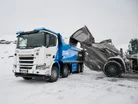
Scania has added a new electric tipper to its growing collaboration with Swedish mining firm LKAB, deploying an 8x4 truck at the Malmberget iron ore mine in northern Sweden.
It marks the first time Scania has fitted a fully-electric truck with two steerable front axles, designed to enhance manoeuvrability and performance in the harsh underground conditions of heavy mining operations.
Named “Sleipner” after the mythological eight-legged horse of Norse legend, the vehicle has entered full operational service as part of a real-world test to transition fossil-fuelled mine logistics to electric transport.
The truck forms part of a broader move by LKAB to reduce carbon dioxide emissions from its large-scale waste rock haulage, with more than 5m tonnes moved annually across its sites.
Built for steep terrain and rugged conditions
Scania bases the 60-tonne Sleipner on its modular electric truck platform. It carries a 38-tonne payload and operates on a five-kilometre route between a loading chute and a backfilling site at Tingvallskulle.
The track includes a 250-metre elevation gain, creating a challenge for traction, braking and energy recovery under heavy load.
The truck is powered by two MP20 battery packs, offering a combined installed capacity of 416 kilowatt-hours (kWh). Propulsion comes from a 400 kilowatt (kW) EM C 1-4 electric motor, delivering performance on par with a conventional diesel engine but without the exhaust emissions or constant vibration associated with combustion power.
The addition of twin steerable front axles is a new step for Scania’s electric platform. It allows for tighter turning radius and added stability on narrow mine roads or sharp inclines. Scania builds the vehicle with both underground and open-pit mining applications in mind, where adaptability and control under load are essential.
“Partnerships like this are essential for learning and accelerating progress,” says Tony Sandberg, Head of Scania Pilot Partner.
The collaboration focuses on full-scale, daily use to see how electric technology holds up under continuous stress. Each trip tests the drivetrain, battery management systems and driver experience, providing data to refine performance and inform future vehicle designs.
“Each new truck we put into operation helps us and our customers understand how to scale electrification across the toughest environments," Tony adds. "This vehicle is just the start of many more mining solutions to come."
Targeting fossil-free logistics
Peter Gustavsson, who leads LKAB’s electrification of mobile machines, sees the deployment as a critical step toward climate targets.
“If it performs as expected, we will have a fully fossil-free solution for transporting waste rock in truly demanding mining operations," Peter says.
The truck replaces a diesel model of similar capacity and, if successful, could offset a large portion of LKAB’s emissions footprint.
Mining logistics contribute a measurable share of the company’s total greenhouse gas output. Shifting to electric power at this scale offers not just reduced emissions but also operational benefits such as lower noise and reduced maintenance.
The mining sector places extreme demands on electrification. Battery durability, weight distribution, torque delivery and infrastructure for charging must all meet high standards. Mines like Malmberget present some of the most challenging conditions for any vehicle, especially those expected to perform heavy-duty work without interruption.
Scania is using Sleipner as a proof-of-concept to show its electric powertrains can meet these demands. The truck builds on the earlier deployment of a 6x4 electric tipper, which has been in service at the same site since 2022. That first truck allows engineers to gather operational insights and feed real-world usage data back into the development process.

The future of mining transport
Scania sees each deployment as a dual opportunity: to support decarbonisation goals for customers and to understand how electric trucks perform in extreme industrial environments.
Feedback from drivers, technicians and site operators feeds directly into updates to battery systems, motor configurations and vehicle chassis. The result is a fast-moving development cycle tailored to high-impact use cases like mining and construction.
Rather than swapping out diesel engines with electric ones in isolation, the collaboration aims to build a transport system that fits within LKAB’s wider ambition for a fossil-free value chain. The knowledge gained from Sleipner will help inform future electric truck platforms capable of scaling across similar operations.
By operating within the full demands of daily mining work, Scania tests not just its technology but also the infrastructure and service support required to keep electric trucks running at full capacity. From thermal management to charging patterns, every factor contributes to building a system that can compete with combustion models in reliability and cost.
Company portals

Executives
Tony Sandberg
Vice President Scania Pilot Partner
