Can Performance EV Maker Polestar Reverse Decline?

Polestar's move to close its UK engineering operations serves as a damning blow to the nation's automotive talent base.
The Swedish performance EV manufacturer has closed its two UK R&D in Nuneaton and Coventry, resulting in 130 redundancies as the company consolidates engineering work at its headquarters in Sweden.
A spokesperson for Polestar told Business Insider that the decision follows the completion of development for the Polestar 5 model. They stated the move is part of "a leaner organisational set-up" with a focus on "developing the best performance EVs on the market".
Polestar, which is majority-owned by China’s Geely Holding, is currently pivoting towards Europe as US tariffs continue to disrupt global automotive supply chains.
Financial performance and market position
Despite selling a record 2,758 vehicles in the UK during the second quarter of 2025, Polestar posted a net loss of $1.03bn for the same period.
For comparison, Tesla registrations stood at just under 8,000, according to data from the Society of Motor Manufacturers and Traders.
The UK closures followed a previous announcement in January 2024 when Polestar declared 450 global job cuts, accounting for approximately 15% of its total workforce.
The retrenchment carries a human story that resonates across the manufacturing industry. In a widely-shared LinkedIn post,
William Hylton, Head of Electrical and Electronics at Polestar, described the process of winding down Polestar UK Engineering as "gut-wrenching". Watching "nearly seven years of hard work and dedication gradually being dismantled" had been "extremely sad," he continued.
William added: "The workshop being emptied, the skips being filled, and the buzz in the office gone. All very hard to deal with, but what’s truly heartbreaking is seeing this amazing team crumble and go its separate ways."
Protecting British engineering talent
William's post also served to highlight what could be at stake for the UK’s industrial capability and engineering prowess.
"Simply put, British engineering is the best," he wrote. "Not just the skills and expertise we have here, but more so the attitude, the work ethic, the team spirit and the good old British humour. We need to cherish it, nurture it, promote it and, most importantly, protect it."
William connected Polestar's situation to upheaval at other British automotive firms, asserting: "We need to stop this great British industry from disappearing."

The UK exit occurs as Polestar contends with challenges to maintain its Nasdaq listing. In November, it announced a reverse stock split. This action was an attempt to avoid delisting after its share price fell to $0.22, well below the required $1 minimum.
Such financial manoeuvres that reduce the number of shares to boost their price can sometimes be viewed as a "cosmetic fix" that may not resolve underlying structural issues. The announcement itself prompted another double-digit drop in the stock.
Global headwinds and future strategy
Polestar has already withdrawn its China-made Polestar 2 from the US market due to tariffs that have left the brand heavily reliant on the US$68,000 Polestar 3 SUV.
While revenue increased by 36% last quarter, Polestar reported a Q3 loss of US$365m – a larger deficit than the US $323m loss recorded in the same period a year earlier.
The upcoming Polestar 4 – due for launch in the US by December – is regarded as a volume seller and its performance will be critical for restoring investor confidence.
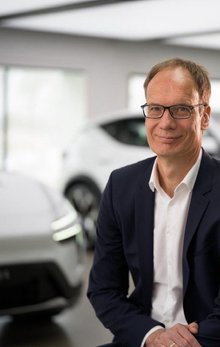
Polestar CEO Michael Lohscheller positioned the reverse stock split as one element of a wider strategy to "make our organisation and operations more efficient" as market conditions become more challenging.
According to the Daily Mail, Polestar is also engaged in cutting costs, reshaping its leadership and transitioning to a dealer-focused sales model. This is supported by fresh but undisclosed funding from Geely.
Ultimately, Polestar's journey represents a major test of how a fast-growing EV brand can balance the need for financial discipline with long-term investment in its skills culture and engineering ecosystems.


Executives
Michael Lohscheller
Chief Executive Officer