
How Nokia's Drones are Transforming the Mining Industry
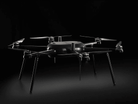
In the mining industry, digital transformation is gaining momentum, driven in part by EV advancements and connectivity innovations.
With increased reliance on drones and aerial surveillance, mining companies are not only improving their processes but also enhancing safety and achieving greater business outcomes.
By deploying advanced 5G networks and robust private wireless solutions, telecom providers can empower EV applications and drone services crucial for mining operations.
“Real-time kinetic positioning improves situational awareness for enhanced safety and security of your workforce and assets across your mine.”
Enhancing safety in hazardous environments
One of the key benefits of emerging technologies in mining is improved safety.
Drone technology, in particular, is proving indispensable in creating safer mining environments.
These unmanned aerial vehicles (UAVs) provide real-time oversight of extensive and risky areas, reducing the need for personnel to venture into unsafe zones.
The ability to employ drones for routine monitoring and urgent reconnaissance greatly mitigates risks to human life.
Increasing operational efficiency with automation
Equipped with sensors and high-definition video technology, drones conduct surveying, mapping and volumetric analysis tasks that were previously labour-intensive and less accurate.
Nokia's drone network is a substantial contributor to this efficiency, featuring "beyond-line-of-sight" capabilities that ensure seamless operations and data gathering.
Mining operations benefit from more than 50 minutes of flight time covering over 40km.
These features enable uninterrupted data collection, critical for mining operations.
Productivity improves significantly with the support of low-latency private wireless networks.
Supporting environmental stewardship and ESG compliance
With rising expectations on ESG performance, drones can offer vital geospatial and environmental monitoring capabilities.
They track land rehabilitation, vegetation growth and dust and water management with exceptional precision.
This data-driven approach aids mining firms in fulfilling reporting responsibilities while fostering trust within local communities.
Integrating with digital platforms and private networks
The synergy between UAVs and 4.9G/LTE or 5G private wireless networks is paramount for real-time data transmission in remote environments.
Enhanced connectivity facilitates various advanced applications like autonomous vehicle coordination and predictive maintenance in mining.
Nokia's digital automation cloud ensures secure local processing, managing sensitive information on-site while allowing instant actionability.
This opens the door to further customisation and bespoke analytics tailored to mining needs.
Substituting manual aerial surveys with drones results in significant cost reductions, with surveys seeing up to a 90% cut in costs.
Besides financial savings, drones consume less energy and cause minimal site disturbance, which supports the mining industry's sustainability objectives.
Adapting to mining's harsh conditions
Mining environments demand robust technology solutions and drones are designed to endure such conditions.
Nokia offers hardware with an IP54 rating, safeguarding against dust and harsh weather.
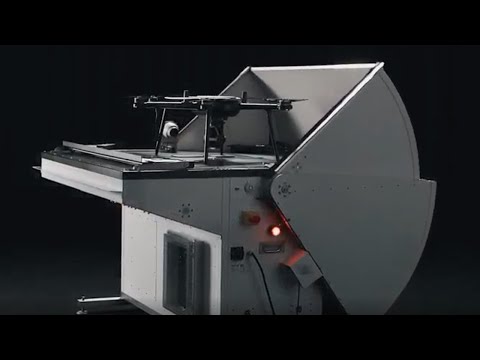
Automated docking stations offer protection and enable uninterrupted, remote drone operations.
This ensures mining companies can maintain constant surveillance and operational capabilities.