
All About VLE, Mercedes' New All-Electric Luxury MPV
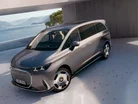
Mercedes-Benz is pushing the boundaries of electric vehicle architecture with its latest launch, the VLE, a vehicle that challenges traditional EV categorisation by merging limousine refinement with multi-purpose versatility.
Built on the German manufacturer's new VAN.EA platform, the model could signal a shift in how premium electric vehicles are conceived and positioned in an increasingly crowded market.
The VLE arrives as Mercedes-Benz CEO Ola Källenius continues to oversee an ambitious product rollout. Having recently unveiled the latest S-Class Saloon, Ola is now introducing what he describes as a Grand Limousine, a vehicle that combines limousine driving dynamics with the practicality of an MPV.
The VLE presents an intriguing proposition that goes beyond conventional electric people carriers.

Electric architecture drives innovation
At the heart of the VLE sits VAN.EA (Van Electric Architecture), Mercedes' new modular electric platform designed to underpin multiple commercial and luxury electric vehicles.
This electric-first foundation represents a strategic consolidation for the manufacturer, reducing production complexity by 50% whilst enabling the integration of advanced technology including an 800-volt charging system.
The platform's scalable design allows Mercedes to deploy a single blueprint across its future van portfolio, from luxury MPVs to commercial workhorses. For the VLE, this translates into practical EV credentials: a range exceeding 435 miles and rapid charging capabilities delivered without the traditional compromises associated with larger electric vehicles.
The 800-volt architecture enables high-performance charging that could prove crucial for buyers concerned about charging infrastructure and journey planning. This technical foundation distinguishes the VLE from competitors still relying on adapted combustion platforms.
Mercedes' strategic investment in dedicated EV architecture demonstrates the manufacturer's commitment to electric mobility beyond simple powertrain substitution. The VAN.EA platform represents a fundamental rethinking of vehicle design principles for the electric age.
Range and efficiency credentials
Ola says the VLE offers "exceptional range – more than 435 miles – benchmark efficiency and high-performance charging". Provisional figures suggest the VLE 300 achieves combined energy consumption from 20.4 to 18.6 kWh/100 km, positioning it competitively within its class despite substantial interior space for up to eight occupants.
The vehicle's efficiency credentials are bolstered by 0 g/km CO₂ emissions and a top-tier CO₂ Class A rating, metrics that could appeal to fleet operators and private buyers navigating increasingly stringent environmental regulations. For EV adopters weighing practical concerns against environmental responsibility, the VLE's figures suggest these priorities need not conflict.
These performance metrics place the VLE amongst the most efficient vehicles in its segment. The combination of range and charging speed addresses two of the most significant barriers to electric vehicle adoption.
For buyers transitioning from combustion engines, the VLE's range figures exceed many conventional petrol and diesel equivalents. This represents a significant milestone in electric vehicle development.
Digital integration and interior flexibility
Mercedes has positioned the VLE as "digital native", incorporating all-glass displays and optional MBUX superscreens that deliver driving information alongside personalised entertainment systems. The interior configuration includes an optional 31.1-inch panoramic screen with 8K resolution.
The cabin design takes inspiration from furniture concepts, featuring flexible seating that transitions between five and eight seat configurations.
Exterior design elements include what Mercedes calls an "iconic grille" and distinctive light signature, complemented by an expansive Sky View panoramic roof. Innovative rear-axle steering aims to deliver enhanced manoeuvrability and handling precision, addressing concerns about managing larger EVs in urban environments.
Ola says: "We could fit the entire Mercedes-Benz Board into one VLE," adding that he would "happily volunteer for the rear seat because they are incredibly comfortable."
As Mercedes' first vehicle built on the VAN.EA platform, the VLE could indicate the manufacturer's direction for premium electric mobility, where range anxiety, charging speeds and interior versatility are addressed through dedicated EV architecture rather than adapted combustion platforms.
Ola says: “And then there’s the design. The all-new VLE makes an instant impression with its new iconic grille and unmistakable light signature. Add to that the expansive Sky View panoramic roof, and you’ve got a real head-turner.”
Provisional figures put the combined energy consumption at 20.4-18.6 kWh/100 km, a considerable feat for a vehicle of this footprint. With 0 g/km of CO₂ emissions and a top-tier CO₂ Class A rating, it proves that grand limousine luxury and environmental responsibility can comfortably share the same lane.