
Menzies Aviation: Driving Sustainable Aviation with EVs
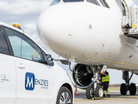
In discussions about decarbonising transport, the aviation sector often receives significant attention due to its substantial emissions and the considerable progress still required to achieve decarbonisation.
However, while much of the focus remains on aircraft themselves, the ground operations supporting global air travel present compelling opportunities for electric vehicle deployment at scale.
Aviation accounts for 2.5% of global CO₂ emissions, according to the University of Oxford's Our World In Data.
There is also a growing focus on electrification within ground operations, where aviation logistics services present significant opportunities for EV adoption.
Menzies Aviation, a service partner to airports and airlines around the world, has reached its target of electrifying 25% of its Ground Support Equipment (GSE).

The achievement could demonstrate how large-scale fleet electrification can be implemented across diverse international operations, offering lessons for other sectors pursuing similar transitions.
Menzies' electric ground support assets
By the end of 2025, the company added more than 620 electric GSE assets, raising the global proportion of electric GSE from 22% in 2024 to 25% by year-end. Eleven locations now operate fleets with more than 70% electric GSE, and more than 20 locations have surpassed 50%.
"Achieving our ambitious goal of 25% electric GSE by 2025 across our fleet and accelerating our adoption of lower‑emissions fuels and renewable energy demonstrates our commitment to reducing emissions, even as our global network continues to grow," says Jonathan Hankin, Head of ESG, Menzies Aviation.
"We are now focused on building on this momentum, with further increases in electric GSE already underway across our network."
Infrastructure drives adoption rates
The company achieved the most progress in Europe and the UK, where airport charging infrastructure is most widely deployed.
The regional variation highlights how charging infrastructure availability could remain a critical factor in fleet electrification success.
At Milan Malpensa Airport in Italy, where Menzies operates with AGS Handling, more than 80% of motorised GSE is now electric, according to the company. In Manchester, the addition of two hybrid de-icing rigs has increased the proportion of electric GSE to 40%.
Fully electric fuel hydrant dispensers were introduced at London Gatwick Airport and Copenhagen Airport, supporting quieter operations, improved air quality and reduced Scope 1 emissions, according to the company.
Menzies Aviation has set a target to become net-zero across its operations by 2045.
The expansion of charging infrastructure across European airports has enabled faster fleet transitions. Investment in this supporting infrastructure demonstrates the critical relationship between operational capability and electrification success rates.
Bridging the electrification gap
Where full electrification is not yet feasible, Menzies is expanding the use of lower-emission alternatives such as Hydrotreated Vegetable Oil (HVO). The approach could illustrate how organisations might navigate the transition period whilst electric vehicle technology and infrastructure continue to develop for specialised applications.
During 2025, the company used two million litres of HVO, representing a 50% year-on-year increase from 2024, with expanded use at London Heathrow and Gatwick Airports.
HVO has fully replaced diesel in several locations, including San Diego, Amsterdam, Los Angeles and Stockholm Arlanda, with further adoption across the UK, Nordics and Spain.
The use of HVO provides an interim solution that delivers immediate emissions reductions whilst infrastructure and technology develop. This dual approach allows the company to maintain operational efficiency across all locations regardless of electrification readiness.
The strategy reflects a pragmatic approach to decarbonisation, recognising that different locations face varying challenges and timelines. By combining electric GSE with alternative fuels, Menzies maintains momentum towards its sustainability targets.
Broader sustainability commitments
The company's ESG agenda also includes social targets. During 2024, Menzies achieved 25% female representation in senior leadership, meeting its goal aligned with IATA's 25by2025 campaign.
Female representation in middle leadership reached 29%, positioning the company to achieve its 40% target by 2033. Menzies has also committed to hiring refugees, with a goal for them to comprise 1% of its global workforce by 2026.
These social commitments complement the environmental initiatives, demonstrating a comprehensive approach to sustainability.
The company recognises that successful transformation requires attention to both environmental and social dimensions.
By setting measurable targets across multiple ESG areas, Menzies creates accountability and tracks progress systematically.
This integrated approach positions the company as a leader in sustainable aviation ground operations.
Company portals

Executives

Jonathan Hankin
Head of ESG