
Maersk: How Heavy-Duty EV Trucking Decarbonises Logistics
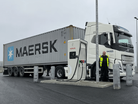
The transport and logistics industry accounts for almost 24% of global CO₂ emissions according to Germany's Federal Statistical Office
Businesses worldwide are adopting EVs, and logistics giant Maersk says they have brought both cost savings and emissions reductions fast.
The logistics industry is a crucial part of global commerce, ensuring products can travel safely worldwide and reach their destinations in optimal condition.
Road transport is a substantial portion of this sector, but also contributes a significant amount of greenhouse gas emissions.
According to data from 2023, fossil-fuelled road transport in the European Union generated 750 million tonnes of carbon dioxide emissions, a 23% rise compared to 1990.
Light and heavy trucks, alongside buses, accounted for 39% of these emissions.
Maersk coordinates several million truck transports annually for its customers which, in many cases, contribute to these figures.
"These figures show that we have a very important but also huge task ahead of us since Maersk has the goal to achieve net-zero emissions by 2040, which also applies to the road transport we operate for our customers," says Kenny Kristensen, Global Head of Energy Transition Business Enablement - Landside Logistics at Maersk.
"From today’s perspective, electric trucks are the best feasible solution for the energy transition on roads from both a total cost of ownership and scalability perspective – even if you still don't see electric trucks that often in many countries."
Challenges facing EV adoption
Kenny's team focuses on reducing the GHG emissions of barge, rail and road transport at Maersk.
As China's production of battery-electric trucks and development of EV technologies advance, Kenny anticipates these developments will soon reach other global markets.
In Western markets, electric trucks currently cost twice as much as comparable diesel models, making them a less attractive short-term investment.
Additionally, whilst a diesel truck requires only from 10 to 12 minutes to refuel, EV trucks can need from two to four hours for a full recharge.

Nevertheless, EV manufacturers are launching more competitive models, which could reduce vehicle costs significantly.
Advanced charging technologies are also emerging, including the Megawatt Charging System (750 kW) and the Twin CCS charging solution (up to 700 kW), enabling full charge in 30 to 45 minutes.
Electric deployment across markets
Maersk is already operating EV trucks for its customers across 14 countries worldwide, including China, the US, the UK and Denmark.
Much of this involves collaboration with local trucking partners to identify optimal EV trucking solutions.
The local partners procure and operate the EV trucks whilst Maersk ensures they are utilised to full capacity by its customers.
Maersk also operates its own fleets of heavy-duty EV trucks.
In Germany, it runs 25 electric Volvos for major customers.
These units had already covered more than 2.7 million kilometres on German highways by 31 December 2025 and the US EV fleet had travelled 14 million kilometres.
The efficiency advantage
According to the US Department of Energy, EVs could be more energy-efficient than other options.
In EVs, from 70% to 75% of the energy used actually powers road movement, whereas diesel combustion vehicles only achieve from 25% to 37% efficiency.
While EV trucks have a higher purchase cost than alternatives, they compensate through energy efficiency, lower fuel costs and reduced maintenance.
As businesses focus on long-term cost savings, lower emissions and greater efficiency, they could be turning towards EV trucks and sustainable logistics providers like Maersk to fulfil their requirements.
Company portals

Executives
Kenny Kristensen
Global Head of Energy Transition Business Enablement - Landside Logistics