
Is Lamborghini Move the Death-Knell for Electric Supercars?

Italian supercar manufacturer Lamborghini has officially abandoned its plans to produce all-electric vehicles.
The company will instead adjust its long-term strategy to focus exclusively on plug-in hybrid models. This decision follows a significant drop-off in demand for fully electric cars among its wealthy global clientele.
While Lamborghini had previously unveiled its first all-electric concept, the Lanzador, in 2023, the firm has confirmed it no longer intends to put this specific model into production.
The move reflects a broader industry shift as luxury brands reassess the "acceptance curve" for battery technology in the high-performance automotive segment.
Customer base rejects battery supercar performance
Stephan Winkelmann, President and CEO of Lamborghini, told The Times that the market for fully electric supercars had effectively stalled.
He said that developing EVs risked becoming an “an expensive hobby” for the brand, noting that the acceptance curve for battery-powered cars among its customer base was getting “close to zero”.
According to Stephan, the Lanzador will be replaced by a plug-in hybrid alternative. Consequently, the carmaker’s range will consist entirely of plug-in hybrids by 2030.
Stephan confirmed that the company would continue to build traditional combustion engine vehicles for “as long as possible” to satisfy existing demand.

Hybridisation strategy drives record global deliveries
Lamborghini, which is owned by Volkswagen via its subsidiary Audi, recently reported record-breaking performance.
The firm delivered 10,747 cars worldwide in 2025, buoyed by the success of its hybridisation strategy. This approach has been met with enthusiasm by customers across the globe.
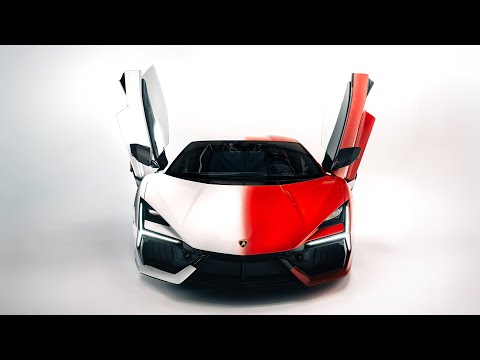
Europe remains the company’s largest market, followed by the Americas and Asia Pacific. The financial results were significantly boosted by sales of the Revuelto hybrid supercar, which starts at £450,000, and the plug-in hybrid version of the Urus SUV.
These models have now been joined by the hybrid Temerario, completing the transition.
Missing emotional connection with electric noise
A primary driver for the reversal is the perceived lack of sensory engagement in electric supercars.
Stephan said sports car lovers had failed to find a “specific emotional connection” with EVs, because they missed the noise of a car with an internal combustion engine.
He argued that the visceral experience of a high-performance engine remains a non-negotiable requirement for his buyers.
“Investing heavily in full-EV development when the market and customer base are not ready would be an expensive hobby and financially irresponsible towards shareholders, customers [and] to our employees and their families,” said Stephan.
Plug-in hybrids offer the best worlds
Stephan maintains that hybrid technology currently represents the most viable path forward for the brand.
“Plug-in hybrids offer the best of both worlds, combining the agility and low-rev boost of electric battery technology with the emotion and power output of an internal combustion engine."
This decision marks a significant shift from the firm's 2021 green ambitions, which included a US$1.77bn investment in hybrid and all-electric vehicles.
By focusing on hybrids, Lamborghini aims to satisfy environmental regulations while preserving the performance characteristics that define its brand identity for its shareholders.
Company portals

Executives
Stephan Winkelmann
Chairman and CEO