
Ilika Q&A: EV Battery Developments for Sustainability
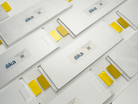
Batteries don’t just power EVs — they can also support a transition to more sustainable electricity as a whole by supporting intermittent renewable sources.
Ilika is a business pioneering materials innovation, developing new materials for energy and electronics markets.
It supports global leading companies including Rolls Royce and Toyota.
Denis Pasero is Product Manager at Ilika, working between customers and technical teams.
He joined the business in 2008 as a scientist specialising in battery technology researching lithium ion battery materials.
Denis shares his expertise with EV Magazine.
What role can batteries play in net zero goals?
Transportation is the largest source of global greenhouse gas emissions, making it a key challenge in meeting climate targets set by the Paris Agreement, including limiting global average temperature increase to below 1.5°C.
Despite commitments at COP summits, progress remains slow and achieving net-zero emissions by 2050 seems increasingly difficult.
While the development of EVs has been an obvious solution to reducing greenhouse gas emissions, recent adoption rates have slowed due to factors including policy shifts, high costs, insufficient infrastructure and continued concerns about battery longevity, charging speed and safety.
In brief, drivers and EV manufacturers always strive for a better battery, but does a better battery also mean a more environmentally friendly battery?
What are solid state batteries?
To date, Lithium-Ion Batteries (LIB) have been the technology of choice for electric-powered transportation.
One of the primary motivations for developing EVs was, and remains, lowering greenhouse gas emissions. Yet the environmental gains have been limited.
Solid State Batteries (SSBs), a post-LIB technology, with enhanced safety and performance compared to LIBs, could also reduce global emissions due to:
- Less complex battery packs with fewer parts
- Lighter vehicles with higher driving efficiency
- Lower battery cooling requirement during charging.
SSBs replace the liquid electrolyte in LIBs with non-liquid components.
SSBs can match, and even exceed the performance of the best LIB cells while offering greater safety.
This combination of performance and safety could enable a simplification of the cooling system in the battery pack and removal of protection-related components, resulting in lighter, more efficient vehicles with longer range, higher power and lower cost.
When SSBs reach the market, will they improve on the reduced global warming impact of LIBs?
How can battery pack modelling help?
To find out, SSB developers Ilika Technologies and battery experts Balance Batteries collaborated in modelling an hypothetical battery pack incorporating SSBs rather than their current LIBs.
The Hyundai Ioniq 5, an electric SUV, was used as the baseline for modelling the pack. The pack’s weight, safety features and design simplifications were analysed, assuming the SSB cells would replace the current LIB cells.
Thanks to their superior features, SSBs were found to offer several advantages, including faster charging —12 minutes versus 18 minutes for LIBs — and lighter weight, reducing the pack weight by 100kg — or adding further cells back in to improve range.
The model also suggests significant cost reductions once SSBs are in production, including a £2,500 (US$3,300) reduction in materials and a 3% energy consumption improvement. What does this mean in terms of greenhouse gas emissions?
A Life Cycle Analysis (LCA) of the hypothetical SSB pack was conducted.
A LCA is a method used to assess the environmental impact of a product or process from its creation to disposal. It evaluates factors like resource extraction, production, use and end-of-life, helping to identify areas for sustainability improvements and reducing overall environmental impact.
Publicly available data and open-source software were used in the LCA. These programs calculate CO₂e, or carbon dioxide equivalent, a unit of measurement that standardises the climate impact of various greenhouse gases.
Since greenhouse gas emissions vary depending on the source of electricity — fossils fuels, renewable energy or a mix of both — the production and usage of the SSB vehicle was located in Europe, which has a mix of 60% fossil fuel vs 40% renewable energy.
The three questions asked were:
- Fewer battery parts: Since the SSB pack contains fewer components, can the reduction in emissions be calculated, which resides from not manufacturing these parts? When Balance Batteries compared the current battery pack weight for Hyundai Ioniq 5 with one including SSBs, they found: 46.8kg less weight due to increased cell-level energy density, 26kg less weight due the replacement of intra-cell foam material with a thinner solid cell carrier, 6.6kg less weight from removing thermal barrier materials and venting parts, up to 15.8kg less weight from thinning down anti-intrusion beams.
By not producing these non-essential components, a total of 750kg of CO₂e could be removed per pack. - Higher driving efficiency: Since the SSB vehicle is lighter and therefore more energy efficient, how does this translate in terms of global warming impact? Weight reduction in less complex packs has a real impact on the driving experience.
Higher accelerating power would be available to a lighter vehicle for the same energy. Less tyre wear could take place during the life of the lighter vehicle.
Using the Worldwide Harmonised Light Vehicle Test Procedure (WLTP), Balance Batteries modelled that the baseline (LIB) vehicle used 185.8Wh/km and the SSB vehicle 180.1Wh/km.
Of course, there are no tailpipe emissions from an EV, but for a given distance, less energy is used that will not need to be recharged.
This efficiency gain represents a reduction of 1.4g of CO₂e per kilometre driven.
Considering that a Hyundai Ioniq 5 offers a range of up to 354 miles, and assuming that the vehicle is charged once a week for 10 years, this represents 420 fewer kilogrmas of CO₂e emitted in the atmosphere over the lifetime of the vehicle. - Reduced cooling during fast charges: Since SSB can charge faster, thanks to their high resilience against heating up, they will not need to be cooled as much as LIB: how does this energy gain translate into CO₂e reductions? It was assumed here that up to 10% of the energy used to recharge the battery pack was “wasted” to simply keep the batteries cool during charging.
This represents a loss of 2.1kg CO₂e per fast charge.
Assuming that fast charges happen only once per month, the SSB vehicle would have emitted 252 fewer kilograms of greenhouse gases in a 10-year period.
Explore the latest edition of EV Magazine and be part of the conversation at our global conference series, Sustainability LIVE.
Discover all our upcoming events and secure your tickets today.
EV Magazine is a BizClik brand