
Hyundai, GM, Volvo & SBTi: This Week's EV Top 5 Stories
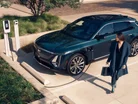
Hyundai Motor Company and General Motors (GM) have revealed their progressive plans involving five co-developed vehicles.
Central to these plans is an electric commercial van, reflecting the duo's commitment to advancing sustainable manufacturing and meeting ambitious market goals in their strategic 2024 collaboration.
Both automotive giants share a vision of extending their market footprint, optimising production techniques and embedding sustainability into their global supply chains.
By producing the five models, Hyundai and GM intend to address different market dynamics.
Four models are earmarked for the Central and South American markets, featuring a blend of a compact SUV, a traditional car, alongside compact and mid-size pick-ups that can operate either via internal combustion or through hybrid propulsion systems.

Volvo Cars fully electric ES90 model is produced with climate-neutral energy and designed with sustainability in mind.
The total carbon footprint of the ES90 is 31 tonnes when using a European energy mix and 26 tonnes with wind energy.
Volvo says that with a European energy mix, the ES90’s footprint is 50% lower than the Volvo S90 mild hybrid variant and 30% lower than a plug-in hybrid S90.
As a result, the ES90 is one of the lowest carbon footprints of any Volvo car to date.
Production is set to start in late Summer of 2025, with the first orders of the EV expected to be delivered to customers in Spring 2026.

The automotive sector manufactures around 80 million vehicles a year and is responsible for more than 10% of the world’s annual carbon dioxide emissions according to McKinsey analysis.
The World Economic Forum says that the sector is redefining its priorities focusing on electric vehicle adoption and decarbonisation.
The Science Based Targets initiative (SBTi) was launched in 2018 to help companies set greenhouse gas (GHG) emissions reduction in alignment with the Paris Agreement goals.
The company provides clear, science based criteria and a validated framework for businesses to reduce emissions to limit global warming.
It has announced that it will be revising its net zero standards, alongside revising its criteria for the automotive sector.
Electric supercars represent the cutting edge of performance, innovation and sustainability, combining blistering speed with groundbreaking engineering.
As the automotive industry shifts toward electrification, these hypercars showcase what is possible when electric propulsion is pushed to its limits.
They deliver instant torque, record-setting acceleration and extreme speeds while also integrating advanced aerodynamics, battery technology and luxury craftsmanship.
From track prototypes to road-ready production models, each reflects a unique vision of the future of high-performance motoring.
EV Magazine has ranked 10 of the top electrified supercars.

AI data cloud company Snowflake has announced a strategic push to enhance AI-driven solutions specifically for the automotive manufacturing sector, with a focus on electric vehicles (EVs).
This enhancement coincides with Snowflake's substantial growth since April 2023, marked by a 416% increase in data application and collaboration initiatives across the manufacturing industry.
The demand for integrated data and AI in automotive manufacturing globally has triggered a 185% surge in analytics deployments and 188% in data science solutions.
These developments highlight manufacturers' increasing reliance on such technologies to attain precision, foster innovation and derive critical business insights.