
How Hyroad is Taking Charge of the Nikola EV Truck Revival
The transition to zero-emission freight has long been hindered by fragmented infrastructure, high capital costs and the operational complexity of managing new fuel technologies.
Hyroad Energy's acquisition of 113 hydrogen fuel cell trucks and supporting assets from Nikola Corporation following its bankruptcy auction could represent a turning point in how the industry approaches hydrogen trucking.
Rather than simply purchasing vehicles, Hyroad is addressing the systemic barriers that have prevented widespread adoption through an integrated service model that bundles technology, infrastructure and operations into a single offering.
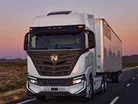
The acquisition, which includes 103 brand-new Nikola Tre hydrogen fuel cell electric trucks along with spare parts, software platforms and intellectual property (IP) assets, positions Hyroad as the owner of the largest Nikola fleet. However, Hyroad's value proposition extends beyond asset ownership.
By December 2025, Hyroad plans to restore full truck-to-cloud connectivity for all Nikola Tre battery electric vehicle (BEV) and fuel cell electric vehicle (FCEV) trucks through a subscription service, directly addressing a critical operational gap that emerged when all cellular lines to production trucks were shut off in July 2025.
Solving the connectivity crisis
Since July 2025, fleets operating Nikola trucks have been unable to access connectivity, live data or digital vehicle management capabilities. This breakdown in digital infrastructure has left operators without the real-time monitoring and fleet management tools that modern logistics operations depend upon.
Hyroad's connectivity restoration service will provide access to the Nikola Fleet web app, the Drive mobile app and continuous cellular data service, re-establishing the digital backbone required for efficient fleet operations.
"This acquisition significantly advances Hyroad's mission to provide turnkey hydrogen trucking solutions that reduce the complexity and risk typically associated with adopting zero-emission technologies," says Dmitry Serov, CEO and Founder of Hyroad Energy.
"These trucks and the corresponding equipment and systems represent immediate capacity to put proven hydrogen fuel cell technology on the road to meet demand for zero-emission trucks."
Trucks-as-a-service business model
Hyroad's approach centres on eliminating the fragmentation that has complicated clean transport adoption.
The company's hydrogen trucks-as-a-service model integrates vehicle provision, maintenance, hydrogen supply and refuelling stations under a pay-per-mile structure. This could remove the substantial upfront capital requirements and operational uncertainties that have deterred many fleet operators from transitioning to hydrogen fuel cell technology.
By consolidating technology, infrastructure and service into one cohesive ecosystem, Hyroad aims to ensure high utilisation, reduced downtime and competitive operating costs.
The model shifts hydrogen trucking from a capital-intensive investment requiring coordination across multiple vendors to a managed service with predictable costs. The trucks will primarily operate in California, where Hyroad continues to develop hydrogen refuelling infrastructure to support the expanding fleet. Hyroad also aims to establish maintenance and parts facilities to provide comprehensive operational support.
Accelerating heavy transport decarbonisation
The service model could address a fundamental challenge in the decarbonisation of heavy transport: the chicken-and-egg problem of vehicle availability and refuelling infrastructure.
By scaling hydrogen production, reducing its carbon intensity and working towards cost parity with diesel, Hyroad's integrated approach could accelerate the timeline for viable zero-emission freight operations.
"I am thrilled to help put the remaining trucks to work and support all the ones already out in the wild providing zero-emission moves to shippers," writes Robert Kelly, VP of Business Development at Hyroad Energy, on LinkedIn.
Nikola's legacy provides a foundation for this expansion.
According to its 2023 Sustainability Impact Report, Nikola achieved milestones including the commercial launch of its Tre FCEV, the first hydrogen Class 8 truck assembled in the US, alongside 100 new sales orders and the introduction of its HYLA hydrogen energy brand. Nikola also developed modular refuelling stations and expanded into Canada.
Nikola's Arizona manufacturing facility demonstrates operational sustainability principles that could inform Hyroad's approach, with partial solar power generation and a 45% waste diversion rate.
Through battery recycling and remanufacturing initiatives, Nikola reclaimed 95% of lithium-ion battery materials, establishing circular economy practices within its operations.
Company portals


Executives

Dmitry Serov
CEO and Founder

Robert Kelly
Vice President of Business Development