Mercedes-Benz: Driving Towards a Greener Future
With private cars and vans contributing to around 10% of global energy-related carbon emissions in 2023, the automotive sector is moving towards electrification.
For automakers like Mercedes-Benz, this change represents a fundamental transformation of its operations from the supply chain to the showroom floor.
Mercedes-Benz is steering its future towards electric mobility, and has been awarded 33rd place in Sustainability Magazine’s Top 250 World’s Most Sustainable Companies 2025.
Ambition 2039 and decarbonisation goals
At the heart of this strategy is Mercedes-Benz's 'Ambition 2039' initiative.
This is a comprehensive plan to render its fleet of new vehicles net carbon neutral across the whole value chain by 2039.
It focuses on vehicle electrification, the use of renewable energy for charging and decarbonisation of its supply chain.
To power this change, Mercedes-Benz has pledged to invest over €60bn (US$69bn) by 2026 into its transformation towards an electric-first future.
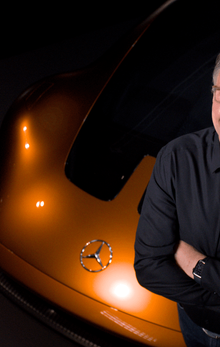
Ulf Zillig, Head of Group Research, Sustainability and R&D Functions at Mercedes-Benz, says: “We are the inventor of the automobile and it is our responsibility to carry this legacy into the future.”
"It is our responsibility to carry this legacy into the future.
"Our most important task right now, during our company's most far-reaching transformation phase, is to set the course for a successful and more sustainable future and make the right decisions to achieve this.
“With Ambition 2039 we are tackling one of our most important sustainability goals: decarbonisation.”
Mercedes-Benz achieved net carbon neutrality in its own vehicle production locations in 2022.
The next milestone is to cover more than 70% of its energy needs with renewable sources by 2030.
It plans to install solar and wind power at its sites and source the remainder through power purchase agreements.
The goal is for every production plant worldwide to be powered by 100% renewable energy with zero carbon emissions by 2039.
Sustainable supply chains for electric vehicles
A core component of the Ambition 2039 plan involves redesigning the material cycle to support a circular economy.
As the industry moves to electric vehicles, the demand for specific raw materials changes.
Mercedes-Benz is focusing on closing its material loops to increase the use of secondary raw materials, reducing the consumption of natural resources.
This approach involves lightweight construction to make its electric vehicles more efficient and resource-conscious.
Mercedes-Benz has outlined a four step plan to manage its material use:
- Rethink: optimising vehicle design for durability and recyclability.
- Reduce: minimising the use of raw materials and energy.
- Repair: extending product lifespan through a network of workshops.
- Recycle: recovering valuable raw materials for new vehicle production.
A circular economy for future mobility
For its electric fleet, Mercedes-Benz is building sustainable supply chains that prioritise the responsible sourcing of raw materials.
Mercedes-Benz's goal is to ensure its products exclusively contain materials mined and produced in adherence to strict human rights and environmental standards.
Renata Jungo Brüngger, Member of the Board of Management for Integrity Governance and Sustainability at Mercedes-Benz, says: “This isn’t just about recycling, it’s about changing how we source materials.”
“By reducing primary resources and focusing on a circular economy we’re minimising our environmental impact.”
"For me, it underscores the importance of combining technological innovation with resource efficiency.
"It’s a testament to our commitment to a more sustainable future of mobility at Mercedes-Benz.”
Company portals

Executives
Dr. Ulf Zillig
Vice President - Group Research, Sustainability & RD Functions
Renata Jungo Brüngger
Member of the Board of Management. Integrity, Governance & Sustainability