
How EVs are Powering Mercedes' Recovery from 57% Profit Drop
The transition to electric vehicles is proving to be a complex and bumpy journey for the world’s leading luxury car manufacturers.
Mercedes-Benz Group reported a 57% drop in full-year operating profit for 2025, with Battery Electric Vehicle (BEV) sales in the car division falling by 8.8% to 168,823 units. Despite these challenges, the company remains committed to its electrification strategy, aiming for a fully electric fleet where market conditions allow.
The "xEV" share of total car sales – including plug-in hybrids and fully electric vehicles – rose to 20.5%of total sales, up from 18.5% in 2024. This reflects the group's ongoing efforts to transition its portfolio, even as it deals with intense competition from Chinese rivals and a broader cooling of the EV market.
Electric vans deliver strong volume growth
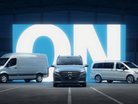
While the passenger car segment saw some softening in EV demand, the Mercedes-Benz Vans division reported significant success. Sales of fully electric vans jumped by 46% year-on-year, reaching 28,488 units.
This propelled the global EV share of the vans division to 8%, with 11%.
Ola Källenius, Chairman and CEO of Mercedes-Benz Group AG, said: “We successfully kicked off our biggest ever product and tech launch programme in 2025. We are launching more than 40 new models in three years.”
The success of the eVans demonstrates that, in certain commercial segments, the transition to emission-free transportation is accelerating. This is supported by heavy investments in the new "VAN.EA" architecture, which is intended to serve as a modular backbone for future electric light commercial vehicles.

New electric architectures to drive future growth
The company's long-term EV strategy hinges on the rollout of three dedicated electric-only architectures starting in 2026:
MB.EA: Modular system for all medium to large passenger cars
AMG.EA: Dedicated high-performance platform for Mercedes-AMG customers
VAN.EA: New era for purpose-made electric vans and light commercial vehicles.
These platforms are designed to provide the scalable modular systems needed to lower costs and improve performance. The firm is also deepening its level of vertical integration by insourcing electric drive technology, ensuring that next-generation motors are developed and built in-house to maintain a competitive edge in efficiency and range.
All EV leaders should attend:
- Sustainability LIVE: The Net Zero Summit, featuring EV LIVE - QEII Centre, London, 4-5 March 2026
- Sustainability LIVE: The US Summit - Navy Pier, Chicago, 21-22 April 2026
Co-located with Procurement & Supply Chain LIVE, these events bring together Chief Sustainability Officers, Chief Procurement Officers and senior decision-makers to discuss the strategies building the future.
Book your tickets online today with group discounts available.
Navigating market demand with flexible lines
To manage the unpredictable nature of the EV transition, the firm is using flexible manufacturing networks that can switch between internal combustion, hybrid and battery power without missing a beat.
This allows the group to adjust its electric output in real-time based on market demand, rather than relying on fixed forecasts. For 2026, the company expects the EV share of its passenger car sales to be between 21 and 23%.
Joerg Burzer, Member of the Board of Management for Production, said: “The revamped plants have successfully set the course for the future production portfolio in the Core and Top-End segments.”
This flexibility is vital as the company prepares its "biggest electric push yet," with the all-electric GLC and C-Class set to lead the charge in early 2026.
Sustainability and the Ambition 2039 roadmap
The group's electrification efforts are part of a broader "Ambition 2039" roadmap, which aims for a net carbon-neutral vehicle fleet across its entire lifecycle.
This includes the supply chain, production and end-of-life phases. All Mercedes-Benz passenger car and battery assembly sites have been carbon-neutral since 2022 and the company is now working to reduce emissions per vehicle by 50% by 2030.
Ola emphasised the luxury and tech focus, saying: “As the world's leading top-end manufacturer, this is our home turf... this is where our greatest earnings potential lies.”
Company portals

Executives
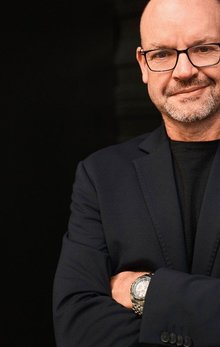
Joerg Burzer
Member of the Board of Management, Chief Technology Officer, Development & Procurement

Ola Källenius
CEO