
How are EVs Powering Hyundai’s Journey to Net Zero by 2045?
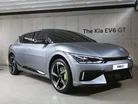
Hyundai Motor Company lays out its full EV strategy in the 2025 Sustainability Report, titled Road to Sustainability, positioning electrification as a central element in its ambition to reach carbon neutrality by 2045.
The report reflects Hyundai’s approach to embedding ESG principles across its global operations, with a focus on EV production, green manufacturing and stakeholder collaboration.
Despite tightening regulations and economic volatility, Hyundai records strong performance in sustainable mobility, underlining its evolving governance model and efforts to decarbonise the automotive sector.

Electrification and net zero targets
At the core of Hyundai’s environmental strategy is the target of net zero emissions by 2045.
In 2024, Hyundai reports more than 2.1 million tonnes of Scope 1 and Scope 2 GHG emissions, these cover direct emissions from operations and indirect emissions from energy use.
It also continues to tackle Scope 3 emissions, indirect emissions from the supply chain, through reform efforts.
The company signs major renewable power agreements in Korea, India and the United States to support its transition to RE100, a commitment to using 100% renewable electricity across all global sites by 2045.
Hyundai’s electrification strategy sees 218,504 EVs sold in 2024, with an annual goal of two million EVs by 2030.
This is backed by a rollout of 21 new EV models and an expansion of production capacity across North America, Europe and Asia.
New EV platforms, including fuel cell and extended-range electric vehicles (EREVs), are in development to provide regulatory flexibility.
Hyundai’s smart factories in Singapore and Georgia are powered by renewable energy and digital systems, underpinning global EV growth and carbon savings.
Further investment in manufacturing efficiency includes the use of low-temperature paint curing technology, which cuts energy use by up to 40%.
At the Asan plant, this innovation saves US$1.06bn annually and avoids more than 2,450 tonnes of CO₂ emissions.
Intelligent systems such as AI-based energy management, digital twins and predictive tools are helping Hyundai create low-carbon production environments tailored for EV output.
"Transportation is responsible for approximately 20% of global carbon emissions, with more than 70% coming from road transport, including cars," says José Muñoz, President and CEO of Hyundai Motor Company.
"EVs have the potential to dramatically reduce these emissions, which is why expanding our electric powertrain offerings is a key milestone in our carbon neutrality efforts.
"We’re extending this initiative to our commercial vehicles as well, using Xcient heavy trucks powered by hydrogen in logistics operations in some markets.
"We continue to expand our hydrogen-electric vehicle lineup across passenger cars, trucks, and buses, while leveraging our proven fuel cell technology for broader applications, including marine vessels, power generation and air mobility.
"We’re also investing in developing new technologies such as EREV, SDV and battery advancements, while collaborating closely with our Group afȥliates to reduce costs in areas like after-sales parts, ȥnance and logistics."
Ethics, equity and human rights in the supply chain
Hyundai’s report details how ESG principles guide its social and supply chain strategies.
Diversity targets include reaching 27% representation of women in management outside Korea by 2030 and 15% within Korea.
By 2027, Hyundai aims to hire more than 450 people with disabilities and expand inclusion training at all sites.
Across 1,120 overseas suppliers, ESG risk assessments are conducted, with new screening for forced labour.
Procurement codes now align with international laws such as the US Uyghur Forced Labor Prevention Act and the EU Forced Labour Regulation.
Hyundai expands human rights training and auditing at 74 sites and introduces grievance systems and site-specific risk mapping.
Health and safety are managed at board level, with 106,000 hours of training delivered to more than 67,000 employees in 2024.
Digital safety dashboards and early-warning systems are used to detect risks at sites and support emergency preparedness.
Hyundai’s board governance now includes a lead independent director and increased female representation at 33%.
Executive key performance indicators (KPIs) now reflect ESG performance, while independent committees on ethics, audits and remuneration are in place to ensure oversight.

A new Business Risk Management Group reports directly to the CEO, tracking threats across supply chains, climate regulation and geopolitics.
ESG risks are incorporated into long-term business planning as transparency and reporting standards evolve globally.
Stakeholders, transport and localised EV production
Hyundai continues to work with stakeholders through structured platforms for employees, suppliers, governments and investors.
Its Win-Win Growth Portal and HMG Partner System support transparency and cooperation.
Investor concerns focus on progress with RE100, EV targets and ethical supply chains.
One example of Hyundai’s electrification in practice is the delivery of electric buses to Tanegashima Yakushima Kotsu, a transport provider in Kagoshima Prefecture, Japan.
The rollout supports Yakushima Island’s transition to zero-emission public transport, part of a broader initiative to reach carbon neutrality on the UNESCO World Heritage Site by 2050.
"I am delighted to see Hyundai's ELEC City electric buses running here on Yakushima, contributing towards a cleaner island environment," says Jaehoon Chang, Hyundai Motor Group Vice Chair.
"Being part of Yakushima's zero-emission island initiative is a significant step towards achieving carbon neutrality on the island by 2050."
The company’s local ESG activities in Korea include ESG-specific investor briefings and the country’s first ESG non-deal roadshow.
Hyundai’s ESG performance is now tied to its credit ratings, affecting borrowing terms and access to finance.
Its reporting aligns with global standards such as the Global Reporting Initiative (GRI), the Sustainability Accounting Standards Board (SASB) and the United Nations Sustainable Development Goals.
Hyundai reports US$128bn in revenue and an 8.1% operating margin.
Net profit reaches US$9.6bn, backed by strong eco-friendly vehicle demand. Sales of hybrid, electric and fuel-cell vehicles total 757,195 units, a 9% increase.
EV sales alone help avoid 1.97 million tonnes of CO₂-equivalent emissions, valued at KRW 226 billion in avoided social costs.
Water reuse efforts save 2.9 million tonnes and US$1.6bn in costs, while energy and emissions-reduction measures show tangible environmental returns.
Production hubs such as the Hyundai Motor Group Metaplant America (HMGMA) are central to meeting regional sustainability requirements and localising EV manufacturing under new regulatory frameworks.