How BMW Made its Hungarian EV Plant Fossil Fuel-Free

BMW Group has established a manufacturing facility in Debrecen, Hungary, that operates entirely without fossil fuels.
This is the first of its car plants to run exclusively on electricity from renewable energy sources.
The facility's inaugural production vehicle is the EV BMW iX3, which rolled off the production line on 18 December 2025, combining digital manufacturing processes with integrated high-voltage battery production.
The plant was developed using fully digital planning methodologies, and it virtually started production in March 2023.
Every stage of the manufacturing process was simulated and validated beforehand, allowing BMW to optimise the positioning for each of the nearly 1,000 robots deployed in the body shop.
This approach aims to minimise costly physical trial-and-error adjustments while maximising operational efficiency from day one.
Digital planning to streamline production
The production and assembly process drew inspiration from Plant Lydia, a BMW facility in China that opened in June 2022.
Plant Lydia pioneers the concept of virtual planning and simulation for BMW's manufacturing network. The shop floor and conveyor system configurations are set up identically in Debrecen, allowing BMW to leverage existing technology and methodologies to simplify implementation.
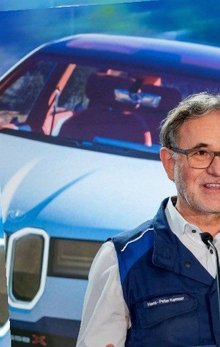
According to Hans-Peter Kemser, Managing Director of BMW Group Plant Debrecen: "Our highly efficient and ergonomic assembly line immediately started running without any issues.
"We achieved this thanks to virtual planning and testing, as well as the outstanding collaboration between our new, highly motivated employees in Debrecen and our experts within the BMW Group's global production network."
The iX3 is the facility's first production vehicle, the inaugural model in BMW's Neue Klasse range.

This decision to manufacture a new vehicle at a new plant aims to reduce complexity and streamline manufacturing processes. Neue Klasse has been described as a new era for BMW, emphasising electrification, digitalisation and updated design principles across its vehicle portfolio.
Renewable energy
Roughly a quarter of the plant's annual power requirements will be met by a 50-hectare on-site photovoltaic system, which converts sunlight to energy using solar panels. Any surplus solar energy generated, particularly on non-working days, will be stored in a 1,800 m³ thermal storage system for later use.
The environmental credentials of the facility could translate directly to the vehicles produced within it. According to BMW, production of each iX3 will generate approximately 80 kg of CO₂e, including emissions from the manufacture of in-house parts at other BMW facilities.
This is a substantial reduction in the carbon footprint compared to previous models.
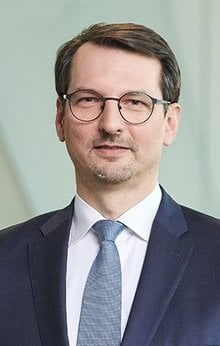
Milan Nedeljković, Member of the Board of Management of BMW and Incoming CEO, says: "Our new plant in Debrecen has been designed and built fully in line with our strategic vision of the iFACTORY: digital from the very beginning, the plant will offer a new dimension in efficient production without fossil fuels."
The Debrecen facility's integration of renewable energy infrastructure, digital planning methodologies and EV production could provide a template for automotive manufacturing's transition towards decarbonisation.
The plant's ability to manufacture high-voltage batteries on-site while operating entirely on renewable electricity demonstrates the technical feasibility of fossil fuel-free automotive production at scale.
Company portals

Executives
Hans-Peter Kemser
Leiter Werk Debrecen
Milan Nedelijkovic
Head of Production Division