
How a Robotaxi Glitch in China Exposed Risks for AVs
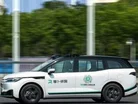
Commuters were trapped on elevated highways after Baidu Apollo Go electric taxis froze mid-lane, revealing critical infrastructure and software risks as the autonomous EV sector scales globally.
Hate being stuck in traffic? Well, imagine the frustration of being trapped in the back of an electric vehicle that simply refuses to move – not because of a road blockage, but because its autonomous technology has gone offline.
This became a reality for dozens of commuters in Wuhan, China on 31 March, when a large-scale technical failure caused more than 100 driverless electric robotaxis to stall simultaneously in the middle of busy roads.
Going wrong in completely new ways
The outage, which local police attributed to a "system malfunction", left passengers stranded for hours and sparked fresh concerns over the reliability of autonomous electric transport systems as the EV industry pushes towards fully automated mobility solutions.
The vehicles involved are part of Apollo Go, the autonomous electric taxi service operated by the Chinese tech giant Baidu. Witnesses and stranded riders took to social media to document the chaos, with videos showing lines of white electric SUVs sitting motionless on elevated highways and busy city intersections.
For some, the experience was more than just an inconvenience. One rider reported being trapped for over 90 minutes on an overpass, surrounded by heavy dump trucks, after their EV froze. Despite repeated calls to customer service, the order was simply cancelled remotely, leaving the passenger stranded in a live lane of traffic.
Local authorities have since confirmed that all passengers eventually exited the vehicles safely and no injuries were reported, but the technical failure has highlighted how unpredictable autonomous software in EVs can occasionally be.
As Professor Jack Stilgoe of University College London told BBC News, while AI drivers might be safer on average than humans, they "still go wrong in completely new ways," creating traffic hazards that human drivers would never initiate.

Autonomous electric taxi evolution
While experiments with automated vehicles date back decades, the modern electric robotaxi industry began to take shape in the late 2010s as battery technology and autonomous systems converged.
Waymo, often considered the industry leader, launched the first truly public driverless commercial service, Waymo One, in Phoenix, Arizona, in late 2018 using electric Jaguar I-PACE vehicles.
Baidu followed suit, launching its service Apollo Go in Beijing, China, in 2020 with electric vehicles, and has since scaled aggressively. By 31 December 2025, the company reported providing more than 3.4 million rides in a single quarter.
Other players in the space include AutoX, Amazon's electric Zoox and Pony.ai, working in cities ranging from Shenzhen, China, to San Francisco, California.
Despite the fast growth in this space, the Wuhan incident is not an isolated case. On 15 December 2025, a power outage in San Francisco caused a fleet of Waymo electric taxis to stop in their tracks, creating similar gridlock in the city.
UK expansion plans
The glitch in Wuhan comes at a sensitive time for Baidu as it looks to expand its autonomous EV operations beyond China.
On 10 December 2025, ride-sharing giants Uber and Lyft announced landmark partnerships with Baidu to bring Apollo Go electric cars to the UK.
The companies are currently preparing for pilot programmes in London, scheduled to begin in the first half of 2026.
These trials will use the Apollo RT6, the sixth-generation, fully-autonomous electric robotaxi. RT6 is equipped with eight LiDAR sensors, 12 cameras, 12 ultrasonic sensors and one wave radar, and features sliding rear doors and a detachable steering wheel.
Uber has also revealed plans to use the Apollo Go in Dubai by 2030.
"With more than 20 AV partners already completing millions of autonomous trips annually, Uber is the global platform where the autonomous vehicle industry can launch at scale," says Sarfraz Maredia, Global Head of Autonomous at Uber.
The incident in Wuhan could demonstrate how regulators in the UK and elsewhere need to weigh up the long-term promise of fewer human-error accidents against the immediate risk of vehicles suddenly stopping.
As cities prepare to welcome these vehicles onto their roads, understanding how system malfunctions could affect not just individual passengers but entire transport networks becomes increasingly critical for the broader adoption of autonomous EV technology.



Executives

Jack Stilgoe
Professor of science and technology policy
Sarfraz Maredia
President, Autonomous Mobility & Delivery