Even Cleaner EVs are Coming, New Analysis Shows
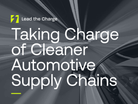
The transition to EVs is driving a broader transformation in how the world's largest automakers approach their supply chains.
The fourth edition of the Lead the Charge Auto Supply Chain Leaderboard shows that efforts to build equitable, sustainable and fossil-free EV supply chains are moving from the margins to the mainstream.
Across 18 global automakers, progress is being measured in action.
A growing number of companies are implementing measures from steel decarbonisation to responsible mineral sourcing.
“This year’s leaderboard shows that cleaner, more responsible supply chains are becoming the norm rather than the exception for carmakers," explains Franziska Gruning, Raw Materials Officer with T&E.
"That shift didn’t happen on its own. The EU's green rules have turned sustainability from a nice-to-have to the price of entry. The Batteries Regulation requires carmakers to trace key battery materials and take action on related risks if they want to sell cars in Europe.”
Mainstreaming supply chain sustainability
The Leaderboard evaluates each company across 88 indicators and 1,584 data points, covering both fossil-free supply chains and human rights due diligence.
Progress is being made across the board, providing strong foundations for more targeted action.
Actions on steel and aluminium decarbonisation and Indigenous Peoples' rights are now implemented by a majority of automakers, compared to a minority just three years ago in 2023.
Galina Angarova, Executive Director of the Securing Indigenous Peoples’ Rights in the Green Economy Coalition, explains: “For the first time, automakers with no commitments to Indigenous Peoples’ rights are in the minority.
"The auto industry must now pivot from recognising rights to operationalising them."
Chinese automakers are among the fastest movers, in some cases surpassing peers in Japan, Korea, the US and EU.
Geely is now the top-scoring East Asian automaker, and one of the industry leaders on battery decarbonisation and recycling.
BYD, the world's largest EV maker, has also taken meaningful first steps, including implementing a new supplier code of conduct and a supply chain grievance mechanism.
More than half of all automakers improved their scores on battery recycling and repurposing.
New benchmarks from industry leaders
The top five companies are progressing at twice the rate of their peers since the first edition of the Leaderboard.
These automakers are Ford, Mercedes, Tesla, Volvo and Volkswagen.
What sets them apart is a shift from broad, generic policies to targeted, material-specific strategies.
These include tackling emissions from coal-fired blast furnaces used in steel production or applying due diligence processes for nickel and lithium. Mercedes, Volkswagen and Tesla now publish detailed raw material reports covering supply chains for lithium, cobalt and nickel.
Volvo and Mercedes are already translating this into commercial reality.
Both are selling new EV models, the Volvo ES90 and the Mercedes CLA, that incorporate specific, quantified amounts of low-carbon steel and aluminium.
Companies which can demonstrate that their policies produce measurable outcomes are pulling ahead.
Tesla holds the highest overall score at 49%, followed by Ford at 45% and Volvo at 44%.
'"These companies have set the curve and further demonstrated how much climate laggards like Toyota have fallen behind," said Matthew Groch, Senior Director at Mighty Earth.
Consumer and regulatory catalysts
Much of the most significant progress is unique to EV supply chains.
Automakers are prioritising low-carbon materials and traceability for their electric fleets far more consistently than for their combustion engine vehicles
For the first time, buyers can begin to compare EV models not just on range or price, but on the quantities of innovative low-carbon materials used in their construction.
Regulatory momentum is also accelerating these trends.
The EU Battery Regulation and upcoming battery passport requirements are requiring automakers to improve supply chain visibility and traceability, particularly for key minerals.
Automakers which build these capabilities now will be better positioned as disclosure requirements tighten across major markets.
A clean car is within reach
The Leaderboard found that a score of 86% is achievable today, despite no automaker scoring higher than 50%.
This could be achieved by matching the existing best practices of peers across different areas.
However, the gap between leaders and laggards remains large.
Companies that fail to accelerate will find themselves increasingly exposed to regulatory risk, investor scrutiny and reputational pressure.
Toyota, the world's biggest carmaker, remains at the bottom of the rankings with an overall score of just 9%, making little progress on steel and aluminium decarbonisation or responsible mineral sourcing.