
The Role of EVs in China's 2035 Decarbonisation Plans
China was responsible for 30% of the world’s greenhouse gas emissions in 2023, according to the European Commission’s Joint Research Centre.
This was nearly 16 gigatonnes of CO₂ equivalent.
In 2020, the country announced its goal to peak CO₂ emissions before 2030 and achieve carbon neutrality before 2060.
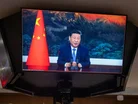
At a United Nations summit ahead of COP30, China’s President Xi Jinping confirmed that China’s updated Nationally Determined Contributions (NDCs) would cover all economic sectors and all greenhouse gases.
“Since I announced the carbon peak and carbon neutrality goals five years ago, China has built the world's largest and fastest-growing renewable energy system, built the world's largest and most complete new energy industry chain and contributed a quarter of the world's new green area,” said President Xi Jinping.
“No matter how the international situation changes, China's active actions to respond to climate change will not slow down, its efforts to promote international cooperation will not weaken and its efforts to promote the building of a community with a shared future for mankind will not stop.”
UN Secretary General António Guterres said: “As we heard today, the world is moving forward. Full-speed ahead. No group or government can stop the clean energy revolution.”
What’s behind China’s climate goals?
Under the Paris Agreement, governments are required to submit and update their NDCs every five years.
These NDCs guide short to medium term plans, each aiming higher than its predecessor.
The third round of NDCs, required in 2025, will outline the nation's actions until 2035, influenced by the Global Stocktake.
China intends to release its new NDCs ahead of COP30 in Belém, Brazil in November 2025.

Beyond these objectives, the government declared in February 2025 that it aims to eliminate severe air pollution before 2026.
The primary contributors to China's emissions include the power sector, accounting for 48% of CO₂ emissions due to energy and industrial processes, as well as industry, transport and buildings, making up 36%, 8% and 5% respectively, based on International Energy Agency (IEA) data.
Renewable energy and coal
According to the IEA, energy production is responsible for nearly 90% of China's greenhouse gas emissions.
An effective energy policy is therefore crucial in realising the nation's goals.
The IEA predicts that under China’s currently announced pledges, low-carbon energy will overtake fossil fuels before 2040 with a fossil fuels peak in 2025.
China's involvement in reducing costs for solar PV and other cleaner energy technologies has been significant, as driven by its government’s five-year plans.
By 2060, renewable sources are anticipated to dominate 80% of China's electricity generation.
Public investment in low-carbon energy research and development has surged by 70% since 2015, and China is responsible for 10% of global patenting in renewable and electric vehicle technologies.
Electrification and EVs
Electrification is vital to reducing emissions in key sectors such as industry, transport and buildings.
These technologies minimise the direct use of fossil fuels and facilitate industries benefiting from cleaner energy as the power sector is progressively decarbonised.
Electric technologies are typically more efficient than traditional fossil fuel-based systems, potentially lowering China's overall energy consumption.
In 2023, about 60% of new electric car registrations happened in China, with over 30% of new car registrations being electric, as reported by the IEA.
Moreover, the country exported 1.2 million electric vehicles in 2023.
Explore the latest edition of EV Magazine and be part of the conversation at our global conference series, Sustainability LIVE.
Discover all our upcoming events and secure your tickets today.
EV Magazine is a BizClik brand