
Cerence AI: The Conversational AI Assistant in BYD EVs
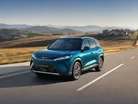
BYD has expanded its partnership with Cerence AI to power BYD’s conversational in-car AI assistant.
Cerence xUI will deploy in new BYD vehicles in Spring of 2026 following an accelerated deployment timeline.
This follows news from 2023 that the companies had partnered to deploy Cerence’s conversational AI in BYD EVs worldwide.

The technology
BYD’s new in-car AI assistant will go online in Spring 2026 in the ATTO 2 DM-i, a compact hybrid SUV. The deployment will be followed by other BYD models.
The technology is powered by Cerence xUI, Cerence’s agentic AI platform purpose-built for automotive environments.
Powered by an LLM, the technology will allow multi-step conversational threads that support natural exchanges where users can speak freely and accomplish more in a single interaction.
The language model is is built on is Cerrence’s CaLLM, Cerence’s own automotive-optimised language models. Users can access a wide range of reliable, real-time information, including travel, music, sports and news.
Christian Mentz, EVP, Chief Revenue Officer at Cerence AI, says: “Our collaboration with BYD is a powerful example of the value Cerence AI provides for our customers and their end users.
“BYD moves with incredible speed, and together we have deployed an LLM-powered, AI experience that reflects both their innovative spirit and their commitment to delivering the best possible user experience to their customers. Together, we are pushing the boundaries of the user experience, deploying in-car assistants that act and feel like conversational companions.”
AI features in EVs
Intuitive features are likely to become more common in EVs as AI and LLM technology advances.
McKinsey argues that EV buyers are most open to services connectivity solutions and in-car digital offerings, with about 69% planning to increase their use of connectivity solutions, compared with 47% of buyers who intend to purchase ICE cars.
By 2030, McKinsey predicts that core connectivity and digital services, such as gaming and over-the-air upgrades for vehicles, could deliver US$250bn to US$400bn in annual incremental value for players across the mobility ecosystem.
A McKinsey consumer survey found that in 2024, 38% of premium car owners in Germany said they would consider switching brands if the alternative offered a better digital experience, over double the share of owners who expressed the same preference in 2015.
The data suggests that buyers are already taking a growing interest in digital experiences in their cars, with the interest in this technology only accelerating as it improves.
It may be the case with EVs, which can be hard to sell on performance features alone, are instead marketed to potential customers by offering more innovative features.
EV leaders won’t want to miss Sustainability LIVE: The US Summit, taking place at Navy Pier, Chicago, on April 21–22.
Co-located with Procurement & Supply Chain LIVE, the event unites senior decision-makers at a time when supply chains, sustainability and business performance are more interdependent than ever.
Secure your place now for The US Summit – group booking discounts available.
BYD’s place in the market
BYD recently suffered its first drop in profits in four years. The company has faced serious competition from other Chinese EV makers.
However, its market in Europe has been strong in 2026.
In the first quarter of 2026, early unofficial estimates from Forbes suggest BYD’s market share in Europe has risen to close to 10%.
General sales and interest in EVs has been strong in 2026, with some price conscious consumers looking to make the switch from ICE vehicles to EVs amid rising fuel prices.


Executives
Christian Mentz
Chief Revenue Officer (CRO)