
Can Hankook Manufacture Circular and Sustainable EV Tyres?
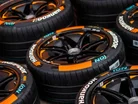
South Korea-based Hankook produces more than 100 million tyres each year and, as EV sales expand globally, the company is focusing its strategy around reducing emissions and sustainable innovation.
Its 16th Environmental, Social and Governance (ESG) Report, covering 2024/25, outlines how Hankook is embedding reuse and upcycling into its tyre manufacturing processes to adapt to environmental demands, regulations and electric mobility.
"Uncertainties over sustainability management will only heighten due to the spread of global protectionism, intensifying geopolitical risks and the adoption of ESG regulations," say Hankook’s Co-CEOs Jong Seon Ahn and Sang Hoon Lee in the report.
"Nevertheless, Hankook Tire & Technology remains confident that ‘sustainability’ will serve as the greatest competitive lever and a new opportunity for us amid the evolving landscape."
EV-specific tyres from recycled and renewable materials
While tyres are not required by law to differ between electric and internal combustion vehicles, tyres designed for EVs can offer benefits such as improved range and better wear resistance.
Battery packs add weight to electric cars, increasing strain on tyres, while the instant torque from electric motors can lead to faster wear.
Hankook says stronger construction and rubber compounds help counter these factors in EV-specific tyres.
To meet this, Hankook is developing tyres using a higher proportion of recycled and renewable materials.
It has succeeded in manufacturing a tyre composed of 81% sustainable raw materials, which includes recycled steel derived from scrap.
The firm says it is actively working toward a tyre made entirely from renewable and recycled content.
A 2024 product, the iON GT, is designed for EVs and made of 77% ISCC PLUS-certified raw materials.
ISCC PLUS is a global certification system for circular and bio-based materials.
Hankook says the iON GT contains the highest percentage of certified raw materials in the market.
Another model, the iON evo, which contains 45% sustainable raw materials, is currently in use on the Porsche Taycan, a high-performance electric sports car.
Alongside materials innovation, Hankook partners with chemical company Solvay Silica to extract silica, a key component in tyres, from industrial waste.
The target is mass production by 2030. Silica improves grip and lowers rolling resistance, which can enhance EV range.
Assessing environmental impacts through tyre life cycles
To better understand and address the environmental footprint of its products, Hankook uses life cycle assessments (LCAs).
This process evaluates the full environmental impact of a tyre from raw material sourcing to manufacturing, usage and disposal.
The company performed LCAs on two of its tyre products made at its Tennessee plant and concluded that the use phase, when tyres are fitted and driven, produces the largest environmental impact.
Noise-reduction foam, often added inside EV tyres, has its own trade-off.
Hankook’s analysis found that its inclusion in the iON evo tyre increased the total environmental impact by 5.4%, due to the added materials and energy involved in production.
The company also identifies resin materials used in EV tyre production as a contributor to environmental load.
Hankook is further exploring how industrial manufacturing techniques can cut waste and reduce energy consumption.

Since 2015, it has adopted metal 3D printing, known in industry as additive manufacturing, to create tyre tread moulds with intricate, ultra-thin patterns.
When applied to mould production, 3D printing cuts waste by 60% and energy use by more than 80%, according to Hankook.
The company says this approach forms part of its wider strategy to use 3D printing for more sustainable tyre production.
Upcycling EV waste into new consumer products
In its upcycling initiative called re:move, Hankook repurposes waste materials from tyre manufacturing and end-of-life tyres.
The company collaborates with a range of brands to give new use to rubber and other compounds that would otherwise be discarded.
Working with footwear brands, Hankook developed shoe outsoles from recycled rubber and showcased these at the 2025 Seoul Half Marathon.
In the mobility sector, it produced a longboard built from sustainable materials, including a rubber cushion made from upcycled tyre content to reduce vibration and noise and wheels crafted from a bio polyurethane derived from algae oil.
Hankook also partners with outdoor equipment brand Helinox.
Together they have created ball feet for camping chairs using rubber compounds recovered from high-performance racing tyres, materials typically discarded after production.
Through these partnerships, Hankook demonstrates how waste from EV tyre production can re-enter the consumer ecosystem, contributing to circular manufacturing and aligning with its ESG ambitions.
By reworking raw material inputs, adjusting EV tyre construction and engaging in upcycling collaborations, Hankook positions its EV product line as a testbed for broader sustainability targets.
The company continues to combine tyre technology, industrial R&D and partnerships to reduce its environmental impact , all while preparing for an electric future.