
How BMW Creates Order and EVs from 36 Million Components
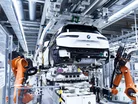
The global automotive industry's transition to electric mobility is placing pressure on supply chains, with the focus of CO2 emissions moving from the exhaust pipe to the production line.
For a manufacturer the size of BMW Group with a purchasing volume of around €90 billion, the challenge is immense. BMW Group must navigate this transition while maintaining competitiveness and advancing its sustainability goals.
Nicolai Martin, Member of the Board of Management of BMW AG, Purchasing and Supplier Network, outlines how the purchasing division manages this complexity.
"Every day, we master immense complexity: merging 36 million components from thousands of suppliers worldwide – to produce one of the most complex and yet emotional products on earth," he says.
He adds: "These figures not only demonstrate the scale of our value creation, but also the enormous responsibility that comes with it."
Electric vehicle supply chain emissions
The growth of electric mobility is fundamentally altering the carbon footprint of vehicle production. According to Nicolai, the ramp-up is moving the focus of CO2 emissions towards the supply chain. This requires a comprehensive approach to decarbonisation that addresses the entire vehicle life cycle, not just emissions on the road.

"Producing electric cars requires extensive resources and involves carbon-intensive processes in the supply chain. Without appropriate measures, the CO2 emissions in the supply chain of an electric vehicle would increase instead of decrease." Nicolai explains. This reality has pushed BMW to integrate sustainability as a core strategic lever.
He adds: "For us, fulfilling sustainability requirements and our commitment to the Paris Climate Agreement are our licence to operate and to lead."
He adds that this focus is also driven by market expectations: "Many of our customers demand more sustainability in our products."
A focus on creating more efficient and circular supply chains could also build resilience, a factor that Nicolai describes as "increasingly becoming a strategic competitive factor".
- 3.1 million cast components
- 520,000 plastic components
- 1.5 million drive shafts
- 275,000 cockpits
- 25,000 special engines
- 560,000 logistics containers
Sustainable materials and circularity in EV manufacturing
The BMW iX3 serves as a key example of BMW Group's strategy in action. BMW Group achieved a 42% reduction in supply chain CO2e emissions for the iX3 compared to its predecessor. This was accomplished by targeting the four material categories that account for 90% of the supply chain's carbon footprint: battery cells, aluminium, steel and thermoplastics.
The approach involves mandating the use of renewable energy and prioritising circular economy principles.
"Our battery cell suppliers are obliged to use 100% renewable energies in cell production as well as anode and cathode production," Nicolai says.
He notes that for the iX3 55% of direct suppliers use renewable energy to produce components, while the vehicle itself uses around 33% secondary raw materials.
The use of secondary materials is particularly important for the high-voltage battery cells. In the iX3's battery, approximately 20% of the material is from secondary sources, while key inputs like nickel, cobalt and lithium each comprise around 50% secondary material.
This strategy helps to conserve natural resources and reduces dependency on primary raw materials. "As long as Europe lacks a functioning raw materials industry of its own, this approach is essential to strengthening our resilience." Nicolai states.
Supplier partnerships and production standards
Achieving these sustainability goals requires a change in how BMW interacts with its suppliers, moving towards a more collaborative model. "To bring innovations into the company, a collaborative partnership with our suppliers is essential," Nicolai explains. "Together with our partners, we want to shape value creation intelligently." This partnership extends to developing CO₂-reduced materials and circular economy solutions.
BMW Group's Landshut plant near Munich is central to implementing these standards. According to Thomas Thym, Head of BMW Group Plant Landshut, the facility acts as a centre of excellence. Its 3,800 employees produce millions of components annually, including cast parts, drive shafts and cockpits.
The plant embodies BMW's commitment to circularity. Two-thirds of the aluminium used in its light metal foundry is already secondary aluminium.
The plant's Zero Defect Supply Chain Campus also extends these standards across the supplier network.
Thomas says the campus "trains suppliers in digital shopfloor management, lean production systems and zero-defect principles," creating a multiplier effect for best practices.
This integrated approach from sourcing to production is fundamental to creating vehicles like the iX3 which Nicolai describes as "a clear example of how our holistic approach leads to highly emotional and innovative products".
Company portals

Executives
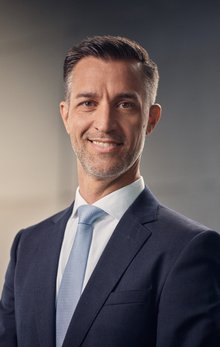
Nicolai Martin
Board Member Responsible for Purchasing and Supplier Network
Thomas Thym
Vice President Purchasing, Quality, Production Light Metal Casting, Head of Component Plant Landshut