ABB: Helping Washington State Ferries Create a Hybrid Fleet
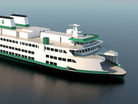
A huge project to electrify Washington State Ferries (WSF), the United States' largest ferry operator, has taken a significant step forward.
WSF has awarded ABB a contract to supply and integrate hybrid-electric propulsion systems for two hybrid-electric 160-auto ferries, launching the operator's System Electrification Programme.
The order, which includes an option for a third ferry, marks a significant step in WSF's plan to build up to 16 ships by the end of 2040 as part of a ferry electrification programme targeting lower emissions.
The first two ships are scheduled for delivery from Eastern Shipbuilding Group in 2030 and 2031.
The contract builds on ABB's early-stage involvement as the propulsion single source vendor in the WSF project, announced in 2024, with the contract amended to reflect the confirmed initial shipbuilding contract.
ABB systems feature largest ship batteries in US history
ABB will supply and integrate end-to-end systems including power distribution, advanced energy management and marine automation for ferries that will include the largest ship batteries ever installed in the US.
Based on ABB Onboard DC Grid and PEMS power and energy management system, the hybrid-electric propulsion systems will achieve substantially lower fuel consumption and operating costs than existing WSF vessels serving the same routes.
Each ship's 13.2-megawatt-hour energy storage systems will enable all-electric, emissions-free operations on short routes and in port.
The ABB systems on board will also reduce vessel noise and vibrations, increasing comfort for passengers and crew whilst minimising impact to local wildlife and coastal communities.
WSF targets 2040 fleet transition
David Sowers, System Electrification Programme Administrator for WSF, said: "The Washington State Ferries System Electrification Programme is the largest of its kind in the United States, and ABB's continued involvement, secured through this new order, helps mitigate risk and ensure on-time vessel delivery."
David added: "ABB's state-of-the-art hybrid-electric propulsion systems demonstrate the company's proven expertise in complex system integration.
“These systems will substantially reduce emissions and enhance operational reliability across the WSF fleet, advancing our long-term modernisation objectives and helping people and businesses thrive throughout the Puget Sound."
Ferry system faces operational challenges
Bruce Strupp, Vice President Americas, ABB's Marine & Ports division, said: "This contract marks another important step in our collaboration with Washington State Ferries.
“It reflects the trust placed in ABB's hybrid-electric propulsion technology and our ability to deliver reliable, scalable solutions that support WSF's long-term sustainability goals.
“We're proud to continue helping WSF modernise its fleet to maintain reliable service and reduce environmental impact."
The path to electrification has been challenging, with years-long delays and rising costs.
The difficulties procuring the new boats have led gubernatorial candidates in both parties to suggest it could make more sense to stick with diesel power in the near term.

WSF fleet shortage creates service disruptions
For riders dealing with delays and cancellations, relief from the ferry system's boat shortage cannot come soon enough.
WSF has long stated that it needs 26 ferries to provide reliable service on every route, with allowances for maintenance tie-ups and a vessel in reserve.
The ferry system currently has 21 car ferries in its fleet, of which 15 are presently in service on a reduced schedule. Five ageing boats are undergoing maintenance or breakdown repairs.
The Wenatchee was in drydock in Seattle for conversion to hybrid-electric propulsion. It returned to service as North America's largest hybrid-electric passenger vessel in mid-2025.
Washington State Ferries will rebuild and modernise its fleet, the largest in the country, by transitioning to hybrid-electric power by 2040.
As the biggest contributor of greenhouse gas emissions among Washington state agencies, WSF burns approximately 19 million gallons of diesel fuel to support nearly 20 million passengers every year.
Programme costs reach US$6bn
The Ferry System Electrification Programme is estimated to cost US$6bn. Currently, US$1.68bn is funded, including US$1.03bn from Move Ahead Washington and US$599m from the Climate Commitment Act.
WSF aspires to operate a reliable and emission-free ferry fleet by 2050. It will expand the fleet by converting six existing vessels to hybrid-electric power, build 16 new hybrid-electric vessels and add shore charging to 16 terminals.
On 1 July 2025, Governor Bob Ferguson announced that Eastern Shipbuilding Group was awarded a contract to build three new hybrid-electric 160-auto ferries.
Shortly afterwards, in November 2025, WSF selected Stemman-Technik of Schüttorf, Germany, to supply charging systems for the hybrid-electric fleet.
Alongside the construction, WSF will work with ABB to design the propulsion system and buy the technology that will power the new vessels, including the engines and batteries.
This should take about a year, then construction begins. WSF is offering Eastern incentives to deliver vessels ahead of schedule and estimates the first 160-auto ferry could be in service as early as 2030.
Jumbo Mark II conversions to kick-off later
In March 2025, WSF announced that midlife upgrades and conversion work on the Tacoma and Puyallup will be delayed until after the 2026 football World Cup.
The Jumbo Mark II vessels are the largest in WSF's fleet and produce 26% of WSF's total annual greenhouse gas emissions.
They also serve the most densely populated urban areas in Central Sound.
In August 2023, Washington State Ferries awarded Vigor Marine a contract for work on the Jumbo Mark II class vessels.
Terminal infrastructure updates enable hybrid ferry operations
In collaboration with regional utilities, WSF is updating 16 terminals to charge hybrid-electric ferries. WSF established memorandums of understanding with Seattle City Light and Puget Sound Energy to collaborate on near-term terminal power needs.
Adding power involves routing new dedicated power lines and installing switchgear and a vessel charging system. A design-build contract for the Seattle Terminal is anticipated in 2026.
Construction is currently anticipated to start in 2026 with Seattle and expected to wrap up in 2029.