
Electronics, Batteries & Motors: How do EV Powertrains Work?
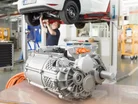
EVs outperform ICE vehicles on both efficiency and acceleration, but what technology gives them this power?
Powertrain architecture in EVs significantly differentiates them from ICE vehicles.
EV Magazine has had an in-depth look at powertrains and the companies creating them.

What makes up a powertrain?
Powertrain refers to the entire system that converts energy into mechanical motion.
The components of an EV powertrain include an energy storage system (a battery or fuel cell), power electronics (inverter/converter with associated controls), an energy conversion system or electric motor and a mechanical transmission system.
The key difference between powertrains in EVs and ICE vehicles is that they are driven by a battery and an electric motor rather than a combustion engine.
EVs must manage electromagnetic fields and chemical energy storage, whereas ICE vehicles must mandate intense heat as controlled explosions in cylinders power the vehicle.
EVs are generally considered more efficient as they are not losing much energy as heat.
Huawei's EV powertrains
Huawei is a key supplier in China’s competitive EV sector with partners including Jac Group and Chery. It has supplied more than 10 car makers with over two million ePowertrains under its DriveONE banner for intelligent powertrain solutions.
The company provides a variety of powertrain models.
Huawei says its 3-in-1 ePowertrain offers ultra high-efficiency four-wheel-drive architecture and kV-level platform for ultra-fast charging. It weighs less than 87 kg and has 250 kW peak power.
By September of 2025, Huawei’s DriveONE had shipped more than 3.5 million units, supporting the delivery of over two million vehicles and accumulating a mileage of over 30 billion kilometres.
Huawei also offers digital technology solutions to support the system.
Bosch's European EV powertrains
Headquartered in Germany, Bosch develops technologies for all stages of the EV value chain including semiconductors and components such as power electronics, drives and complete systems.
Bosch’s powertrains systems are made up of a variety of internally developed architecture.
The latest generation of Bosch's power electronics uses 800 V silicon carbide semiconductor technology. The company says this results in higher efficiency, increased performance and longer ranges.
Bosch says its 3-in-1 e-axles (e-machine, transmission and inverter) reduce the previous complexity of the electric drive and make the entire powertrain significantly more compact and efficient.
Its charger-converter is a combined system solution comprising an onboard charger and DC/DC converter. This system solution supports all vehicle-to-X functions for integrated charging.
The company says that its 48 V battery, also available with an optional 48/12 V DC/DC converter, efficiently supports the powertrain and ensures a reliable power supply within the vehicle.
Bosch supplies a variety of large automotive companies, including Volkswagen Group. In 2022, Volkswagen and Bosch signed a memorandum of understanding to explore the establishment of a European battery equipment solution provider.