Candela’s Hydrofoil Ferry to Redefine Stockholm’s Waterways
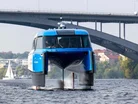
Candela’s goal is to shift waterways away from fossil fuels by replacing diesel-powered ferries with electric vessels that are faster, cleaner and more efficient.
Now, with the Candela P-12 hydrofoil ferry, Nova's first completed public transport season in Stockholm shows this mission is well underway.
Nova’s debut is part of Stockholm’s growing green transport strategy.
Cutting emissions, lifting expectations
Nova shows that an electric-powered ferry with hydrofoils – underwater wings that lift the vessel’s hull above the water while moving – can offer not just environmental gains but a vastly improved commuter experience.
As performance data comes in, Nova is proving both popular and effective, prompting interest beyond Sweden.
Launched in Autumn 2024, Nova has returned to Stockholm’s waters with encouraging results.
Its hydrofoil design reduces water resistance by lifting the ferry’s hull above the surface at speed – creating a smoother ride while also increasing energy efficiency.
Nova cruises at 25 knots – around 29 mph or 46 km/h – making it the fastest electric passenger ferry operating anywhere in the world.
Its electric motor reduces emissions and operating costs compared to traditional ferries.
According to the city’s public transport authority, Nova emits just 23 grams of CO₂ per passenger-kilometre, compared to 439 grams for older diesel-powered vessels – a 95% reduction in carbon dioxide output.
Nova also consumes 84% less energy per passenger-kilometre than the ferries it replaces.
These metrics show that electric marine transport is not just an environmentally sound option, but also a more economical one.
“This feat shows that fast, electric waterborne transport over long distances is viable today, not a distant future,” says Gustav Hasselskog, Candela’s Chief Executive Officer and Founder.
“We don’t have to wait for tomorrow. We have the technology to shift towards sustainable marine transport now. This is just the beginning.”
A hydro-hit with commuters
Environmental benefits aside, Nova is proving a favourite with Stockholm’s commuters.
Its service along Route 89 – between Tappström and Stockholm City Hall – takes just 30 minutes, half the time of a similar trip by road.
With occupancy rates averaging 80% and many journeys fully booked, Nova is one of the most in-demand rides in the city’s public transport network.
Since its launch, ridership on Route 89 has climbed by 30% as travellers opt for the ferry instead of driving or taking the bus.
The performance has convinced Region Stockholm to expand operations.
Nova is set to run six days a week, moving to daily service by May.
A formal evaluation is planned for August, but with demand climbing, Candela is already working on expanding the service to more routes in the region.

“High-speed, comfortable waterborne transit can actually convert car commuters into ferry riders, a holy grail for sustainable city planning,” says Gustav.
Next stop: the world
Beyond Stockholm, Candela is drawing international attention.
The company is already set to deliver ferries to customers in Saudi Arabia, New Zealand and the United States, showing strong global appetite for clean, efficient water transit.
Hydrofoil ferries such as Nova offer clear advantages for cities and islands where building bridges or tunnels is costly or impractical.
For areas with moderate passenger numbers, they provide a fast, comfortable, low-emission alternative to traditional ferry models.
These ferries also outperform regular electric ferries by combining lower energy usage with quicker journeys.
The success of Nova’s trial season in Stockholm reinforces the idea that large-scale marine electrification is possible now.
Gustav says: “With a relatively modest investment, charging stations could be built to fully electrify marine transport in the Stockholm archipelago.
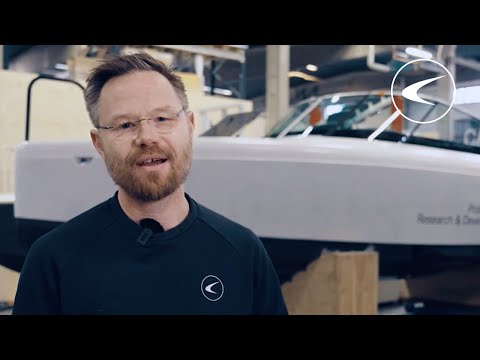
“For a few hundred million euros, a charging network covering Europe’s coastal passenger transports would become a reality.”
The global ferry industry currently moves 4.27 billion passengers and 373 million vehicles each year.
Nova’s performance suggests there is an effective and sustainable alternative ready to meet that demand.
Explore the latest edition of EV Magazine and be part of the conversation at our global conference series, Sustainability LIVE.
Discover all our upcoming events and secure your tickets today.
EV Magazine is a BizClik brand